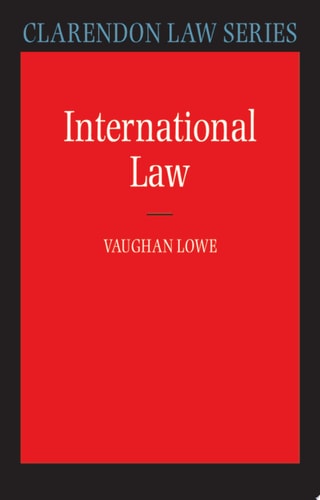
International Law
0
0
As an Amazon Associate and affiliate partner, Menrva Books earns from qualifying purchases. Learn more
Author Description
International Law Is Both An Introduction To The Subject And A Critical Consideration Of Its Central Themes And Debates. The Opening Chapters Of The Book Explain How International Law Underpins The International Political And Economic System By Establishing The Basic Principle Of The Independence Of States, And Their Right To Choose Their Own Political, Economic, And Cultural Systems. Subsequent Chapters Then Focus On Considerations That Limit National Freedom Of Choice (e.g. Human Rights, The Interconnected Global Economy, The Environment). Through The Organizing Concepts Of Territory, Sovereignty, And Jurisdiction The Book Shows How International Law Seeks To Achieve An Established Set Of Principles According To Which The Power To Make And Enforce Policies Is Distributed Among States.
Menrva's Summary
THE THESIS
This text investigates how international law functions as a foundational framework for the global political and economic system while balancing state sovereignty against collective international obligations. Vaughan Lowe, a recognized scholar in the field, utilizes a conceptual approach to examine the tension between the independence of states and the constraints imposed by human rights, environmental standards, and global economic integration. The book argues that international law is not merely a set of static rules but a dynamic mechanism for distributing power and authority among sovereign entities.
THE SCOPE MAP
What You Will Find
- Analysis of the principles of territory, sovereignty, and jurisdiction
- Examination of the legal underpinnings of the international political system
- Discussion on the limitations of national freedom of choice
- Exploration of the intersection between domestic policy and global economic requirements
Scope Limits
- Does not provide a comprehensive case-by-case analysis of every international treaty
- Does not focus on the procedural minutiae of international litigation
THE AUTHORITY PERSPECTIVE
Experts frequently cite this work as a foundational text for students seeking to understand the theoretical underpinnings of international law. Readers often note that the prose maintains a high level of academic rigor while remaining accessible to those new to the subject matter.
Page Count:
328
Publication Date:
2007-01-01
Publisher:
Oup Oxford
ISBN-10:
0191509078
ISBN-13:
9780191509070
Law
International relations
International Law