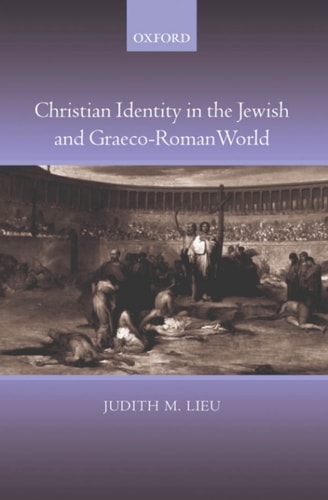
Christian Identity in the Jewish and Graeco-Roman World
0
0
As an Amazon Associate and affiliate partner, Menrva Books earns from qualifying purchases. Learn more
Author Description
'I am a Christian' is the confession of the martyrs of early Christian texts and, no doubt, of many others; but what did this confession mean, and how was early Christian identity constructed? This innovative study sets the emergence of Christian identity in the first two centuries, as it is constructed by the broad range of surviving literature, within the wider context of Jewish and Graeco-Roman identity. It uses a number of models from contemporary constructionist views of identity formation to explore how what comes to be seen as 'Christian' literature creates a sense of what to be 'a Christian' means, and traces both continuities and discontinuities with the ways in which Jewish and Graeco-Roman identity were also being constructed through their texts. It seeks to acknowledge the centrality of texts in shaping early Christianity, historically as well as in our perception of it, while also exploring how we might move from those texts to the individuals and communities who preserved them. Such an approach challenges more traditional emphases on the development of institutions, whether structures or credal and ethical formulations, which often fail to recognize the rhetorical function of the texts on which they draw, and the uncertainties of how well these reflect the actual practice and experience of individuals and communities. While building on recent recognition of the diversity of early Christianity, the book goes on to explore the question whether it is possible to speak of a distinctive Christian identity across both the range of early texts and as a pressing historical and theological question in the contemporary world.
Menrva's Summary
THE THESIS
This book investigates how early Christian identity was constructed through literature during the first two centuries within the broader context of Jewish and Graeco-Roman cultural frameworks. Judith M. Lieu, a scholar of early Christianity, utilizes contemporary constructionist models to analyze how early texts functioned rhetorically to define what it meant to be a Christian. By shifting the focus from institutional development to the role of textual production, the author explores the relationship between written discourse and the lived experiences of early communities.
THE SCOPE MAP
What You Will Find
- Analysis of early Christian, Jewish, and Graeco-Roman texts from the first two centuries.
- Application of social constructionist identity models to historical religious texts.
- Examination of the rhetorical function of literature in shaping group identity.
Scope Limits
- Does not focus on the development of formal church institutions or ecclesiastical structures.
- Does not provide a comprehensive history of credal or ethical formulations.
THE AUTHORITY PERSPECTIVE
Scholars recognize this work as a significant contribution to the study of early Christian self-definition, particularly for its focus on the intersection of literature and social identity. Readers frequently note the academic density of the prose and the author's rigorous challenge to traditional institutional-focused historical narratives.
Page Count:
384
Publication Date:
2006-01-01
Publisher:
Oxford University Press
ISBN-10:
0191532347
ISBN-13:
9780191532344
Religion
History
Sociology of Religion
Ancient History
Theology
Early Christianity
Christianity and other religions
Community Tags
Similar Books