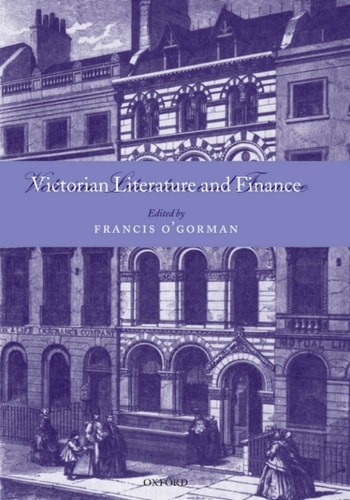
Victorian Literature and Finance
0
0
As an Amazon Associate and affiliate partner, Menrva Books earns from qualifying purchases. Learn more
Author Description
Victorian Britain offered to the globe an economic structure of unique complexity. The trading nation, at the heart of a great empire, developed the practices of advanced capitalism - currency, banking, investment, money markets, business practices and theory, intellectual property legislation - from which the financial systems of the contemporary world emerged. Cultural forms in Victorian Britain transacted with high capitalism in a variety of ways but literary critics interested in economics have traditionally been preoccupied either with writers' hostility to industrial capitalism in terms of its shaping of class, or with the development of consumerism. Victorian Literature and Finance is the first extended study to take seriously the relationships between literary forms and those more complex discourses of Victorian high finance. These essays move beyond the examination of literature that was merely impatient with the perceived consequences of capitalism to analyse creative relationships between culture and economic structures. Considering such topics as the nature of currency, women and the culture of investment, the profits of a modern media age, the dramatization of risk on the Victorian stage, the practice of realism in relation to business theory, the culture of speculation at the end of the century, and arguments about the uncomfortable relationship between literary and financial capital, Victorian Literature and Finance sets new terms for understanding and theorizing the relationship between high finance and literary writing in the nineteenth century.
Menrva's Summary
THE THESIS
This collection of essays investigates the intricate and often overlooked intersections between Victorian literary forms and the complex discourses of nineteenth-century high finance. Editor Francis O'Gorman, a scholar of Victorian literature, compiles contributions that shift the focus away from traditional critiques of industrial capitalism toward a nuanced analysis of how economic structures like banking, investment, and speculation informed creative writing. The text argues that Victorian literature did not merely react against capitalism but actively engaged with its mechanisms to shape narrative and cultural expression.
THE SCOPE MAP
What You Will Find
- Analysis of currency, banking, and investment practices in Victorian literature
- Examination of the relationship between business theory and literary realism
- Studies on the dramatization of financial risk and speculation
- Discussions regarding the intersection of gender and investment culture
Scope Limits
- Does not focus on general industrialization or class-based critiques of factory labor
- Does not provide a comprehensive history of the British economy, but rather its literary representation
THE AUTHORITY PERSPECTIVE
Scholars and critics recognize this volume as a significant intervention in the field of Victorian studies for its focus on high finance rather than simple anti-capitalist sentiment. The text is noted for its academic rigor and is frequently cited by researchers examining the intersection of economic history and narrative theory.
Page Count:
256
Publication Date:
2007-01-01
Publisher:
Oxford University Press
ISBN-10:
0191536008
ISBN-13:
9780191536007
History
Economics
Linguistics
Professional Career & Trade
English & College Success
In literature
Literary Criticism
English
Community Tags
Similar Books