Antigone; Oedipus the King; Electra
0
0
As an Amazon Associate and affiliate partner, Menrva Books earns from qualifying purchases. Learn more
Author Description
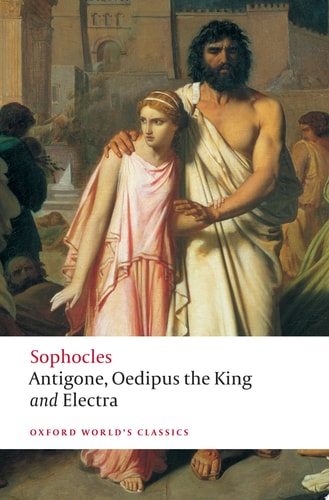
Love and loyalty, hatred and revenge, fear, deprivation, and political ambition: these are the motives which thrust the characters portrayed in these three Sophoclean masterpieces on to their collision course with catastrophe. Recognized in his own day as perhaps the greatest of the Greek tragedians, Sophocles' reputation has remained undimmed for two and a half thousand years. His greatest innovation in the tragic medium was his development of a central tragic figure, faced with a test of will and character, risking obloquy and death rather than compromise his or her principles: it is striking that Antigone and Electra both have a woman as their intransigent 'hero'. Antigone dies rather neglect her duty to her family, Oedipus' determination to save his city results in the horrific discovery that he has committed both incest and parricide, and Electra's unremitting anger at her mother and her lover keeps her in servitude and despair. These vivid translations combine elegance and modernity, and are remarkable for their lucidity and accuracy. Their sonorous diction, economy, and sensitivity to the varied metres and modes of the original musical delivery make them equally suitable for reading or theatrical peformance. ABOUT THE SERIES: For over 100 years Oxford World's Classics has made available the widest range of literature from around the globe. Each affordable volume reflects Oxford's commitment to scholarship, providing the most accurate text plus a wealth of other valuable features, including expert introductions by leading authorities, helpful notes to clarify the text, up-to-date bibliographies for further study, and much more.
Menrva's Summary
THE PULSE
The central conflict arises when individual moral imperatives collide with the rigid demands of state authority, divine law, and ancestral curses. Each protagonist faces a singular, defining test of will that forces them into a confrontation with their own fate. Antigone, Oedipus, and Electra operate within a world governed by the inescapable weight of prophecy and the volatile nature of the gods. The narrative framework utilizes the conventions of Attic tragedy, employing dialogue, choral commentary, and the inevitable progression toward catastrophic resolution.
INSIDE THE PAGES
- Exploration of the conflict between personal ethics and civic duty
- Utilization of the chorus to provide moral and social context
- Focus on the tragic flaw or hamartia of the central figures
- Examination of the role of fate and divine intervention in human affairs
- Emphasis on the psychological burden of ancestral guilt
- Structural reliance on the unities of time, place, and action
- Use of dramatic irony to heighten the tension for the audience
- Portrayal of strong-willed characters who refuse to compromise their principles
THE COLLECTIVE ECHO
Readers and critics frequently highlight the enduring relevance of these plays due to their exploration of universal human dilemmas. Discussion often centers on the psychological depth Sophocles grants his protagonists, particularly the female leads who defy societal expectations. Scholars emphasize the precision of the language and the structural economy that allows for maximum emotional impact within a short timeframe. Many audiences note that the tension between individual agency and predestined outcomes remains a primary point of analysis in both academic and theatrical circles.
Page Count:
224
Publication Date:
2008-01-01
Publisher:
OUP Oxford
ISBN-10:
019156110X
ISBN-13:
9780191561108
Drama
Classical
Mythology
Greek Tragedy
Special Topics
Humanities
Plays
Theatre