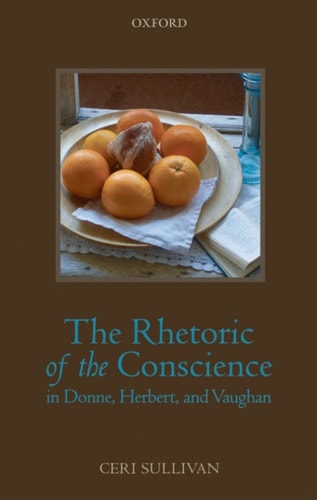
The Rhetoric of the Conscience in Donne, Herbert, and Vaughan
0
0
As an Amazon Associate and affiliate partner, Menrva Books earns from qualifying purchases. Learn more
Author Description
There is a kind of conscience some men keepe, Is like a Member that's benumb'd with sleepe; Which, as it gathers Blood, and wakes agen, It shoots, and pricks, and feeles as bigg as ten Donne, Herbert, and Vaughan see the conscience as only partly theirs, only partly under their control. Of course, as theologians said, it ought to be a simple syllogism, comparing actions to God's law, and giving judgement, in a joint procedure of the soul and its maker. Inevitably, though, there are problems. Hearts refuse to confess, or forget the rules, or jumble them up, or refuse to come to the point when delivering a verdict. The three poets are beady-eyed experts on failure. After all, where subjects can only discover their authentic nature in relation to the divine it matters whether the conversation works. Remarkably, each poet - despite their very different devotional backgrounds - uses similar sets of tropes to investigate problems: enigma, aposiopesis (breaking off), chiasmus, subjectio (asking then answering a question), and antanaclasis (repetition with a difference). Structured like a language, the conscience is tortured, rewritten, read, and broken up to engineer a proper response. Considering the faculty as an uncomfortable extrusion of the divine into the everyday, the rhetoric of the conscience transforms Protestant into prosthetic poetics. It moves between early modern theology, rhetoric, and aesthetic theory to give original, scholarly, and committed readings of the great metaphysical poets. Topics covered include boredom, torture, graffiti, tattoos, anthologizing, resentment, tears, dust, casuistry, and opportunism.
Menrva's Summary
THE THESIS
This work investigates how the metaphysical poets John Donne, George Herbert, and Henry Vaughan utilized specific rhetorical strategies to navigate the inherent failures and complexities of the conscience in relation to divine law. Ceri Sullivan, a scholar of early modern literature, examines the intersection of theology and linguistic theory to argue that these poets viewed the conscience not as a simple moral compass, but as a fractured, often uncooperative faculty. By analyzing the poets' shared use of tropes such as aposiopesis and chiasmus, the author demonstrates how they transformed Protestant devotional practices into a complex, prosthetic poetics of the soul.
THE SCOPE MAP
What You Will Find
- Analysis of rhetorical devices including enigma, chiasmus, and subjectio.
- Examination of the conscience as a linguistic and theological construct.
- Comparative study of Donne, Herbert, and Vaughan's devotional backgrounds.
- Discussion of thematic elements such as casuistry, resentment, and the physical manifestations of guilt.
Scope Limits
- The study focuses primarily on the specific rhetorical mechanics of the conscience rather than a comprehensive biography of the poets.
- It does not provide an exhaustive survey of all metaphysical poetry, limiting its scope to the three named authors.
THE AUTHORITY PERSPECTIVE
Scholars recognize this text as a rigorous contribution to the study of early modern rhetoric and its application to metaphysical verse. Readers frequently note the academic density of the prose, which demands a high level of familiarity with both theological history and classical rhetorical terminology.
Page Count:
296
Publication Date:
2008-01-01
Publisher:
Oxford University Press
ISBN-10:
0191563285
ISBN-13:
9780191563287
Poetry
Literary Criticism
Rhetoric
English & College Success
Early Modern
Metaphysical Poetry
English
Theology
Community Tags
Similar Books