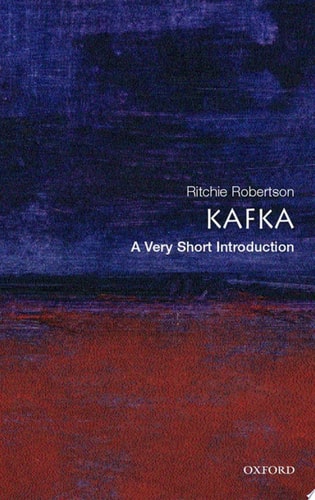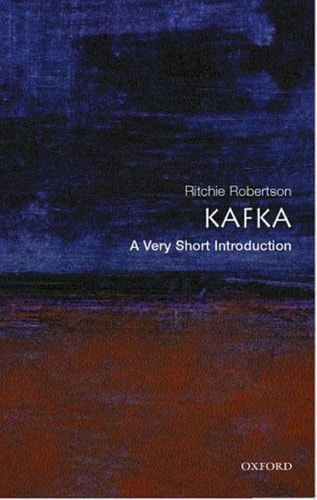
Kafka: A Very Short Introduction
0
0
As an Amazon Associate and affiliate partner, Menrva Books earns from qualifying purchases. Learn more
Author Description
'When Gregor Samsa awoke one morning from troubled dreams he found himself transformed in his bed into a monstrous insect...' So begins Franz Kafka's most famous story Metamorphosis. Franz Kafka (1883-1924) is among the most intriguing and influential writers of the twentieth century. During his lifetime he worked as a civil servant and published only a handful of short stories, the best known being The Transformation. All three of his novels, The Trial, The Castle, and The Man Who Disappeared [America], were published after his death and helped to found Kafka's reputation as a uniquely perceptive interpreter of the twentieth century. Kafka's fiction vividly evokes bizarre situations: a commercial traveller is turned into an insect, a banker is arrested by a mysterious court, a fasting artist starves to death in the name of art, a singing mouse becomes the heroine of her nation. Attending both to Kafka's crisis-ridden life and to the subtleties of his art, Ritchie Robertson shows how his work explores such characteristically modern themes as the place of the body in culture, the power of institutions over people, and the possibility of religion after Nietzsche had proclaimed 'the death of God'. The result is an up-to-date and accessible portrait of a fascinating author which shows us ways to read and make sense of his perplexing and absorbing work. ABOUT THE SERIES: The Very Short Introductions series from Oxford University Press contains hundreds of titles in almost every subject area. These pocket-sized books are the perfect way to get ahead in a new subject quickly. Our expert authors combine facts, analysis, perspective, new ideas, and enthusiasm to make interesting and challenging topics highly readable.
Menrva's Summary
THE THESIS
This book investigates the life and literary legacy of Franz Kafka, seeking to reconcile his personal crises with the complex, surreal themes present in his major works. Ritchie Robertson, a scholar of German literature, utilizes biographical details and textual analysis to examine how Kafka’s experiences as a civil servant and his existential concerns shaped his unique narrative voice. The text argues that Kafka’s fiction serves as a profound commentary on the institutional and cultural anxieties of the twentieth century.
THE SCOPE MAP
What You Will Find
- Biographical overview of Franz Kafka’s life from 1883 to 1924
- Analysis of major works including The Metamorphosis, The Trial, and The Castle
- Exploration of themes such as the body in culture, institutional power, and post-Nietzschean religion
- Contextualization of Kafka within the broader landscape of modern literature
Scope Limits
- Does not provide an exhaustive line-by-line exegesis of every minor short story
- Focuses primarily on literary and cultural interpretation rather than deep psychological clinical diagnosis
THE AUTHORITY PERSPECTIVE
Readers frequently note the accessibility of this text, which manages to distill complex literary themes into a concise format suitable for students and general readers. Experts highlight this as a reliable entry point for those seeking to understand the historical and philosophical underpinnings of Kafka’s work.
Page Count:
150
Publication Date:
2004-01-01
Publisher:
OUP Oxford
ISBN-10:
0191577936
ISBN-13:
9780191577932
Non-Fiction
Philosophy
Biography
English & College Success
European
Literary Criticism
English