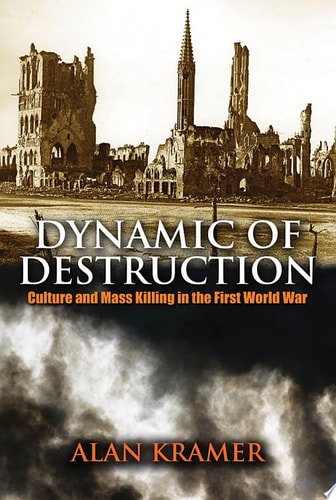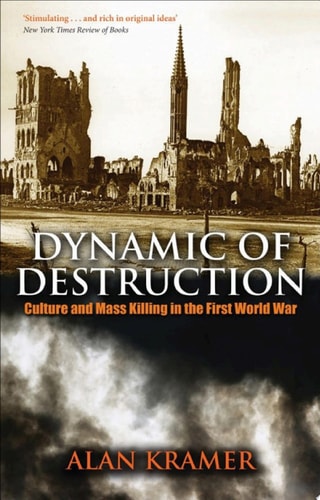
Dynamic of Destruction: Culture and Mass Killing in the First World War
0
0
As an Amazon Associate and affiliate partner, Menrva Books earns from qualifying purchases. Learn more
Author Description
On 26 August 1914 the world-famous university library in the Belgian town of Louvain was looted and destroyed by German troops. The international community reacted in horror - 'Holocaust at Louvain' proclaimed the Daily Mail - and the behaviour of the Germans at Louvain came to be seen as the beginning of a different style of war, without the rules that had governed military conflict up to that point - a more total war, in which enemy civilians and their entire culture were now 'legitimate' targets. Yet the destruction at Louvain was simply one symbolic moment in a wider wave of cultural destruction and mass killing that swept Europe in the era of the First World War. Using a wide range of examples and eye-witness accounts from across Europe at this time, award-winning historian Alan Kramer paints a picture of an entire continent plunging into a chilling new world of mass mobilization, total warfare, and the celebration of nationalist or ethnic violence - often directed expressly at the enemy's civilian population.
Menrva's Summary
THE THESIS
This book investigates the transformation of military conduct during the First World War, specifically examining how the systematic destruction of culture and mass violence against civilians became normalized. Alan Kramer, a recognized historian of modern European conflict, utilizes a vast array of primary source documentation and eyewitness accounts to argue that the war marked a definitive shift toward total warfare. He posits that the targeting of civilian populations and cultural heritage was not an accidental byproduct of combat, but a deliberate strategy rooted in nationalist and ethnic ideologies that redefined the boundaries of legitimate military engagement.
THE SCOPE MAP
What You Will Find
- Analysis of the destruction of the Louvain university library as a symbolic turning point.
- Examination of mass mobilization and the ideological justification for targeting non-combatants.
- Comparative study of cultural destruction and ethnic violence across various European fronts.
- Integration of primary source testimonies and contemporary media reports from 1914-1918.
Scope Limits
- The text focuses primarily on the European theater and does not provide an exhaustive global history of the conflict.
- It does not attempt to provide a comprehensive military strategy analysis of traditional battlefield maneuvers.
THE AUTHORITY PERSPECTIVE
Historians frequently cite this work as a significant contribution to the study of total war and the erosion of the distinction between combatants and civilians. Scholars note the rigorous use of archival evidence to support the author's claims regarding the intentionality of cultural destruction during the period.
Page Count:
448
Publication Date:
2008-01-01
Publisher:
OUP Oxford
ISBN-10:
0191580112
ISBN-13:
9780191580116
History
Military History
European History
World War
Cultural History