Author Description
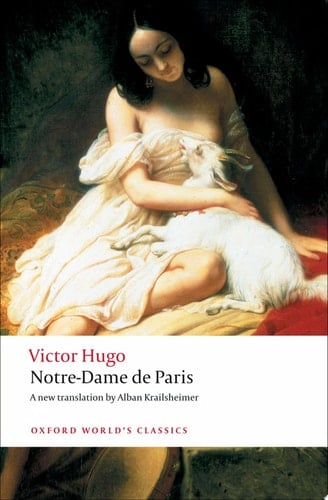
Three extraordinary characters caught in a web of fatal obsession are at the centre of Hugo's novel. The grotesque hunchback Quasimodo, bell-ringer of Notre-Dame, owes his life to the austere archdeacon, Claude Frollo, who in turn is bound by a hopeless passion to the gypsy dancer Esmeralda. She, meanwhile, is bewitched by a handsome, empty-headed officer, but by an unthinking act of kindness wins Quasimodo's selfless devotion. Behind the central figures moves a pageant of picturesque characters, ranging from the cruel, superstitious king, Louis XI, to the underworld of beggars and petty criminals. These disreputable truands' night-time assault on the cathedral is one of the most spectacular set-pieces of Romantic literature. Hugo vividly depicts medieval Paris, where all life is dominated by the massive cathedral. His passionate enthusiasm for Gothic architecture is set within the context of an epic view of mankind's history, to which he attaches even more importance than to the novel's compelling story. Alban Krailsheimer's new translation is a fresh approach to this monumental classic by France's most celebrated Romantic. ABOUT THE SERIES: For over 100 years Oxford World's Classics has made available the widest range of literature from around the globe. Each affordable volume reflects Oxford's commitment to scholarship, providing the most accurate text plus a wealth of other valuable features, including expert introductions by leading authorities, helpful notes to clarify the text, up-to-date bibliographies for further study, and much more.
Menrva's Summary
THE PULSE
A web of fatal obsession ensnares three central figures within the shadow of the medieval cathedral of Notre-Dame. The narrative follows Quasimodo, a bell-ringer with physical deformities, his protector the archdeacon Claude Frollo, and the dancer Esmeralda, who becomes the object of their conflicting desires. As these characters navigate the social and religious hierarchies of 15th-century Paris, their lives intersect through acts of devotion, manipulation, and tragic misunderstanding. The story unfolds with a focus on the architectural and historical significance of the cathedral, which serves as both a setting and a silent witness to the human drama.
INSIDE THE PAGES
- Detailed descriptions of Gothic architecture
- Exploration of 15th-century Parisian social strata
- Themes of fatalism and obsession
- Contrast between the grotesque and the beautiful
- Integration of historical figures like Louis XI
- Vivid depictions of the medieval underworld
- Philosophical commentary on the progression of history
- Use of the cathedral as a central, symbolic character
THE COLLECTIVE ECHO
Readers and critics frequently highlight the novel's immense atmospheric depth and its role as a foundational text of Romantic literature. Discussion often centers on the intricate balance between the personal tragedies of the protagonists and the author's expansive, almost encyclopedic focus on the history of Paris. Many observers note that the architectural descriptions are not merely background but are essential to the thematic weight of the narrative. The pacing is often described as deliberate, allowing for a thorough examination of the social and moral tensions of the era. This work remains a frequent subject of analysis for its ability to blend high-stakes human drama with a broader, epic view of human civilization.
Page Count:
591
Publication Date:
1999-01-01
ISBN-10:
0191605891
ISBN-13:
9780191605895
Romantic
Historical
English & College Success
English
Gothic
classic
French literature