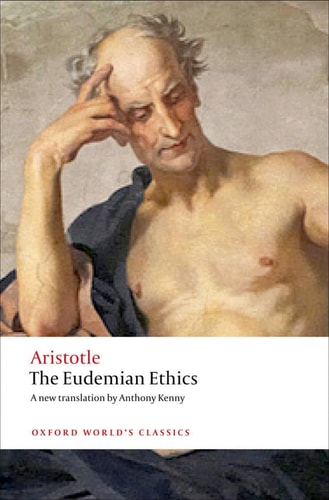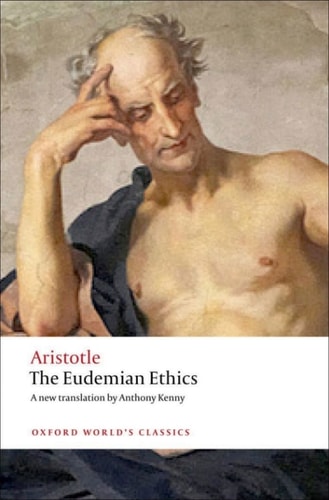
The Eudemian Ethics
0
0
As an Amazon Associate and affiliate partner, Menrva Books earns from qualifying purchases. Learn more
Author Description
'We are looking for the things that enable us to live a noble and happy life...and what prospects decent people will have of acquiring any of them.' The Eudemian Ethics is a major treatise on moral philosophy whose central concern is what makes life worth living. Aristotle considers the role of happiness, and what happiness consists of, and he analyses various factors that contribute to it: human agency, the relation between action and virtue, and the concept of virtue itself. Moral and intellectual virtues are classified and considered, and finally the roles of friendship and pleasure. It deals with the same issues as the better-known Nicomachean Ethics, with which it holds three books in common, and its special qualities, as well as the similarities and differences between the two works, are of fundamental concern to anyone interested in Aristotle's philosophy. This is the first time the Eudemian Ethics has been published in its entirety in any modern language. Anthony Kenny's fine translation is accompanied by a lucid introduction and explanatory notes, which assist the reader in understanding this important work. ABOUT THE SERIES: For over 100 years Oxford World's Classics has made available the widest range of literature from around the globe. Each affordable volume reflects Oxford's commitment to scholarship, providing the most accurate text plus a wealth of other valuable features, including expert introductions by leading authorities, helpful notes to clarify the text, up-to-date bibliographies for further study, and much more.
Menrva's Summary
THE THESIS
The Eudemian Ethics investigates the fundamental components of a noble and happy life through a systematic analysis of human agency, virtue, and the nature of well-being. Aristotle, the foundational Greek philosopher, constructs a rigorous framework to determine what makes life worth living. By examining the interplay between moral and intellectual virtues, he seeks to define the conditions under which individuals can achieve true flourishing. This treatise serves as a critical companion to his other ethical works, providing a distinct perspective on the practical application of virtue in daily existence.
THE SCOPE MAP
What You Will Find
- Detailed classification of moral and intellectual virtues
- Analysis of the relationship between human action and ethical character
- Exploration of the roles of friendship and pleasure in a virtuous life
- Comparative insights regarding the Nicomachean Ethics
Scope Limits
- The text does not provide a modern psychological or neuroscientific account of happiness
- It does not offer a comprehensive political theory, focusing primarily on individual ethics
THE AUTHORITY PERSPECTIVE
Scholars and students of philosophy frequently identify this text as a vital, albeit secondary, source for understanding Aristotelian moral theory. Readers often note the academic density of the prose, which requires careful study to fully grasp the nuances of the author's arguments.
Page Count:
195
Publication Date:
2011-01-01
Publisher:
OUP Oxford
ISBN-10:
0191618020
ISBN-13:
9780191618024
Philosophy
Non-Fiction
Ethics