Author Description
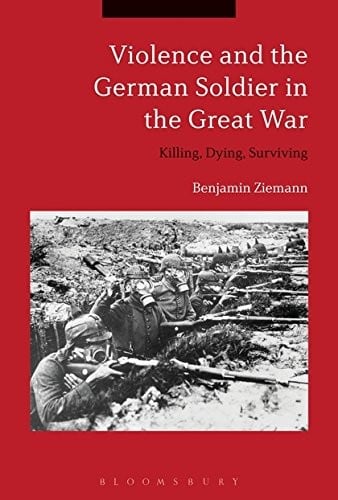
"During the Great War, mass killing took place on an unprecedented scale. Violence and the German Soldier in the Great War explores the practice of violence in the German army and demonstrates how the killing of enemy troops, the deaths of German soldiers and their survival were entwined. As the war reached its climax in 1918, German soldiers refused to continue killing in their droves, and thus made an active contribution to the German defeat and ensuing revolution. Examining the post-war period, the chapters of this book also discuss the contested issue of a 'brutalization' of German society as a prerequisite of the Nazi mass movement. Biographical case studies on key figures such as Ernst Jünger demonstrate how the killing of enemy troops by German soldiers followed a complex set of rules. Benjamin Ziemann makes a wealth of extensive archival work available to an Anglophone audience for the first time, enhancing our understanding of the German army and its practices of violence during the First World War as well as the implications of this brutalization in post-war Germany. This book provides new insights into a crucial topic for students of twentieth-century German history and the First World War. During the Great War, mass killing took place on an unprecedented scale. Violence and the German Soldier in the Great War explores the practice of violence in the German army and demonstrates how the killing of enemy troops, the deaths of German soldiers and their survival were entwined. Both the escalation of violence--for example in the German atrocities against Belgian civilians in 1914--and the refusal to continue killing must be situated in a specific spatial setting, and should not be interpreted primarily as the cause of specific ideologies or collective mentalities. As the war reached its climax in 1918, German soldiers refused to continue killing in their droves, and thus made an active contribution to the German defeat and ensuing revolution. Examining the postwar period, the chapters of this book also discuss the contested issue of a 'brutalization' of German society as a prerequisite of the Nazi mass movement. Biographical case studies on key figures such as Ernst Jünger demonstrate how the killing of enemy troops by German soldiers followed a complex set of rules."--Bloomsbury Publishing.
Page Count:
320
Publication Date:
2017-01-01
ISBN-10:
1474239587
ISBN-13:
9781474239585
History