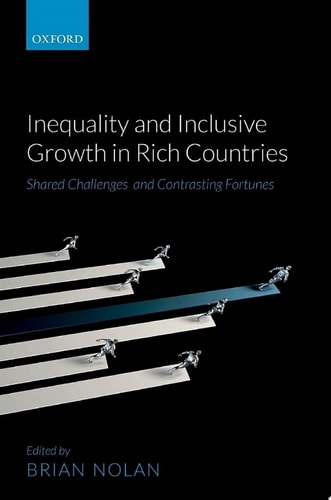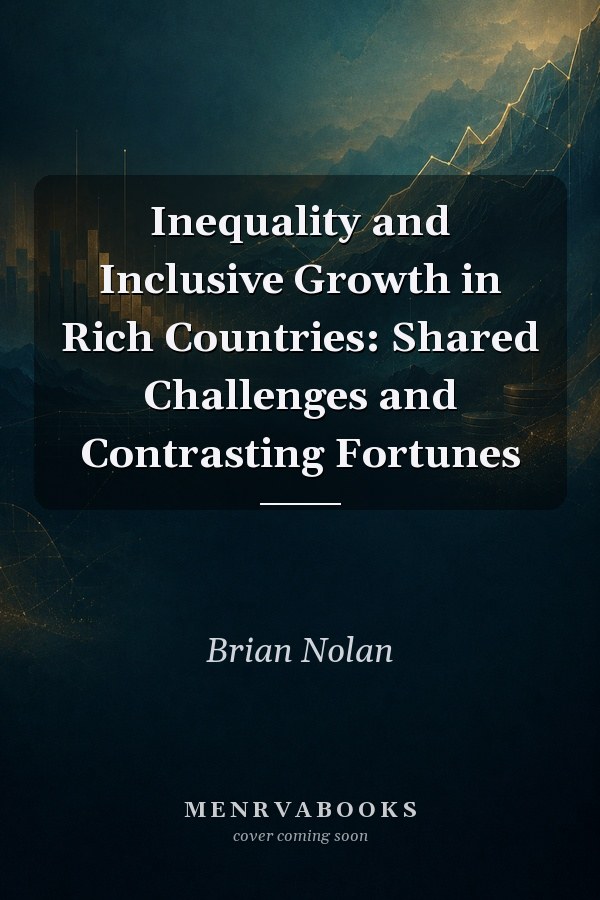
Inequality and Inclusive Growth in Rich Countries: Shared Challenges and Contrasting Fortunes
0
0
As an Amazon Associate and affiliate partner, Menrva Books earns from qualifying purchases. Learn more
Author Description
Rising inequality in income and wealth across the OECD has been widely recognised and identified as a major concern; this book links this phenomenon with stagnation in wages and incomes for ordinary working households in order to address the challenge of promoting growth and prosperity. The concentration of wealth at the top of society is now seen as a threat to social and political stability. The book aims to identify what structures and policies are associated with success or failure in limiting the rise in inequality and promoting income growth for those in the middle and lower reaches of the income distribution. It analyses the varying experiences of ten rich countries over recent decades in depth, revealing that there are indeed responses that governments and societies can adopt, and that stagnation and rising inequality do not have to be accepted, but can be combatted given the political will and capacity.
Menrva's Summary
THE THESIS
This book investigates the relationship between rising income inequality and stagnant wage growth in OECD nations to determine how policy frameworks can foster more inclusive economic prosperity. Brian Nolan, a prominent researcher in social policy and inequality, utilizes comparative longitudinal data from ten developed nations to examine the structural factors contributing to wealth concentration. The work argues that rising inequality is not an inevitable byproduct of modern capitalism but a result of specific policy choices that can be reversed through deliberate political action.
THE SCOPE MAP
What You Will Find
- Comparative analysis of income distribution trends across ten OECD countries.
- Evaluation of wage stagnation patterns for middle and lower-income households.
- Assessment of policy interventions that successfully mitigate wealth concentration.
Scope Limits
- The analysis is restricted to ten specific rich countries rather than a global survey.
- The text focuses primarily on economic and policy mechanisms rather than cultural or psychological drivers of inequality.
THE AUTHORITY PERSPECTIVE
Experts recognize this work as a rigorous comparative study that provides a clear empirical basis for policy reform in developed economies. Readers frequently note the academic density of the prose, which makes it a valuable resource for policymakers and students of political economy.
Page Count:
432
Publication Date:
1900-01-01
Publisher:
Oxford University Press
ISBN-10:
0191844829
ISBN-13:
9780191844829
Economics
Public Policy
Sociology
Social policy