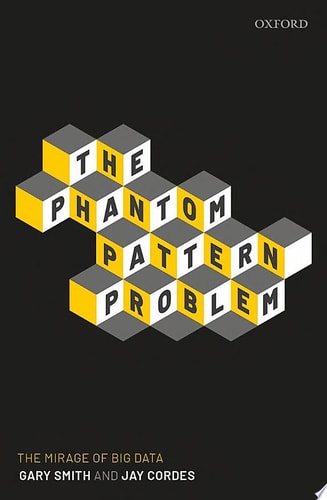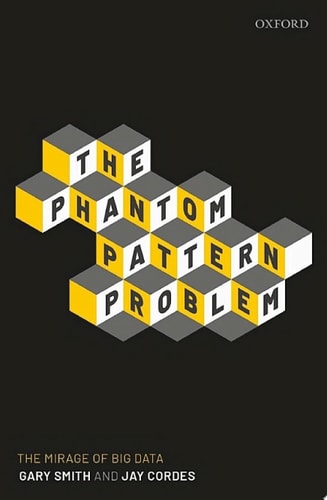
The Phantom Pattern Problem: The Mirage of Big Data
0
0
As an Amazon Associate and affiliate partner, Menrva Books earns from qualifying purchases. Learn more
Author Description
Pattern-recognition prowess served our ancestors well, but today we are confronted by a deluge of data that is far more abstract, complicated, and difficult to interpret. The number of possible patterns that can be identified relative to the number that are genuinely useful has grown exponentially - which means that the chances that a discovered pattern is useful is rapidly approaching zero. Patterns in data are often used as evidence, but how can you tell if that evidence is worth believing? We are hard-wired to notice patterns and to think that the patterns we notice are meaningful. Streaks, clusters, and correlations are the norm, not the exception. Our challenge is to overcome our inherited inclination to think that all patterns are significant, as in this age of big data patterns are inevitable and usually coincidental. Through countless examples, The Phantom Pattern Problem is an engaging read that helps us avoid being duped by data, tricked into worthless investing strategies, or scared out of getting vaccinations.
Menrva's Summary
THE THESIS
How can individuals distinguish between meaningful statistical patterns and the inevitable, coincidental noise inherent in large datasets? Gary Smith, an economist and professor, utilizes his background in statistical analysis to challenge the human tendency to over-interpret data. He argues that in the modern era of big data, the sheer volume of information makes the discovery of spurious correlations statistically certain, leading to flawed decision-making in fields ranging from finance to public health.
THE SCOPE MAP
What You Will Find
- Analysis of cognitive biases related to pattern recognition
- Examination of the reproducibility crisis in scientific research
- Application of Bayesian reasoning to evaluate evidence
- Case studies involving investment strategies and medical data
Scope Limits
- The text does not provide a technical manual for advanced machine learning algorithms
- It does not cover the history of computing hardware or database architecture
THE AUTHORITY PERSPECTIVE
Experts and readers frequently note the accessibility of the prose, which translates complex statistical concepts into practical warnings for non-specialists. The book is widely regarded as a cautionary text for anyone navigating data-driven environments in professional or personal contexts.
Page Count:
0
Publication Date:
1900-01-01
Publisher:
Oxford University Press,
ISBN-10:
0191896519
ISBN-13:
9780191896514
Non-Fiction
Psychology
Economics
Data Mining
Data Science
Statistics
Critical thinking
Community Tags
Similar Books