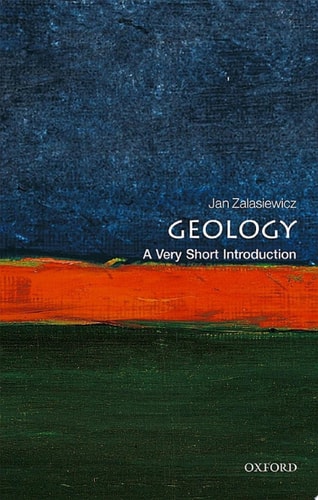
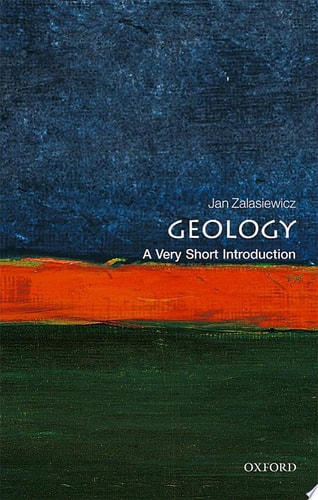
Geology: A Very Short Introduction
0
0
As an Amazon Associate and affiliate partner, Menrva Books earns from qualifying purchases. Learn more
Author Description
Ranging across the 4.6 billion year history of the planet, geology is the subject that encompasses almost all that we see around us, in one way or another, and also much that we cannot see, beneath our feet, and on other planets. The fruits of geology provide most of the materials that give us shelter, and most of the energy that drives our modern lives. Within the study of geology lie some of the clues to the extraordinary impact our species is going to play out on the planet, in centuries and millennia to come. In this Very Short Introduction Jan Zalasiewicz gives a brief introduction to the fascinating field of geology. Describing how the science developed from its early beginnings, he looks at some of the key discoveries that have transformed it, before delving into its various subfields, such as sedimentology, tectonics, and stratigraphy. Analysing the geological foundations of the Earth, Zalasiewicz explains the interlocking studies of tectonics, geophysics, and igneous and metamorphic petrology and geochemistry; and describes how rocks are dated by radiometric dating. Considering the role and importance of geology in the finding and exploitation of resources (including fracking), he also discusses its place in environmental issues, such as foundations for urban structures and sites for landfill, and in tackling issues associated with climate change. Zalasiewicz concludes by discussing the exciting future and frontiers of the field, such as the exploration of the geology of Mars. ABOUT THE SERIES: The Very Short Introductions series from Oxford University Press contains hundreds of titles in almost every subject area. These pocket-sized books are the perfect way to get ahead in a new subject quickly. Our expert authors combine facts, analysis, perspective, new ideas, and enthusiasm to make interesting and challenging topics highly readable.
Menrva's Summary
THE THESIS
How does the study of geology provide a framework for understanding the Earth's 4.6 billion-year history and its ongoing physical evolution? Jan Zalasiewicz, a professor of palaeobiology, utilizes his extensive academic background to synthesize the complex mechanisms of planetary science. He presents a structured overview of how geological principles explain both the composition of the Earth and the human reliance on its resources, framing the discipline as a critical lens for viewing environmental and climate-related challenges.
THE SCOPE MAP
What You Will Find
- Overview of geological subfields including sedimentology, tectonics, and stratigraphy.
- Explanation of radiometric dating and geochemical analysis.
- Discussion on the intersection of geology with resource exploitation and urban planning.
Scope Limits
- Does not provide an exhaustive technical manual for professional field geologists.
- Does not offer deep-dive case studies into specific regional geological formations.
THE AUTHORITY PERSPECTIVE
Experts and readers recognize this text as a highly accessible entry point for students and curious laypeople seeking a concise overview of the field. The prose is noted for its clarity and ability to distill vast scientific concepts into a manageable format.
Page Count:
168
Publication Date:
2018-01-01
Publisher:
OUP Oxford
ISBN-10:
0192526634
ISBN-13:
9780192526632
Non-Fiction
Science
Academic
Reference
Geology
Earth Sciences
Earth Science
Community Tags
Other Editions(2)
Similar Books




Reader Comments
Share Your Thoughts
No comments yet. Be the first to share your thoughts!