Author Description
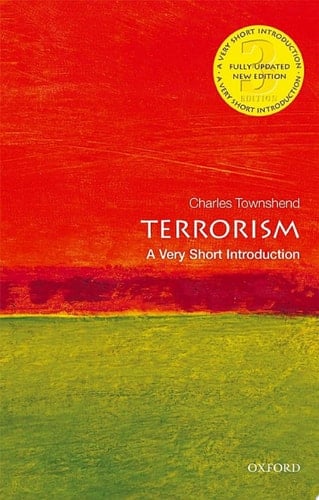
Is one person's terrorist another's freedom fighter? Is terrorism crime or war? Can there be a 'War on Terror'? For many, the terrorist attacks of September 2001 changed the face of the world, pushing terrorism to the top of political agendas, and leading to a series of world events including the war in Iraq and the invasion of Afghanistan. The recent terror attacks in various European cities have shown that terrorism remains a crucial issue today. Charting a clear path through the efforts to understand and explain modern terrorism, Charles Townshend examines the historical, ideological, and local roots of terrorist violence. Starting from the question of why terrorists find it so easy to seize public attention, this new edition analyses the emergence of terrorism as a political strategy, and discusses the objectives which have been pursued by users of this strategy from French revolutionaries to Islamic jihadists. Considering the kinds of groups and individuals who adopt terrorism, Townshend discusses the emergence of ISIS and the upsurge in individual suicide action, and explores the issues involved in finding a proportionate response to the threat they present, particularly by liberal democratic societies. Analysing the growing use of knives and other edged weapons in attacks, and the issue of 'cyberterror', Townshend details the use of counterterrorist measures, from control orders to drone strikes, including the Belgian and French responses to the Brussels, Paris, Nice, and Rouen attacks. ABOUT THE SERIES: The Very Short Introductions series from Oxford University Press contains hundreds of titles in almost every subject area. These pocket-sized books are the perfect way to get ahead in a new subject quickly. Our expert authors combine facts, analysis, perspective, new ideas, and enthusiasm to make interesting and challenging topics highly readable.
Menrva's Summary
THE THESIS
This book investigates the complex nature of terrorism as a political strategy and the challenges democratic societies face in responding to it. Charles Townshend, a professor emeritus of international history, utilizes historical analysis and contemporary case studies to examine the evolution of terrorist violence from the French Revolution to modern jihadist movements. He argues that understanding the ideological and local roots of these groups is necessary to formulate proportionate and effective counterterrorist measures.
THE SCOPE MAP
What You Will Find
- Historical evolution of terrorism as a political tool
- Analysis of modern threats including cyberterrorism and individual suicide actions
- Evaluation of state responses such as control orders and drone strikes
Scope Limits
- Does not provide an exhaustive encyclopedia of every terrorist organization in history
- Does not offer a definitive policy manual for national security agencies
THE AUTHORITY PERSPECTIVE
Readers frequently note the academic density of the prose despite the book's compact size. Experts highlight this as a foundational text for students and general readers seeking a balanced overview of the complexities surrounding global terrorism.
Page Count:
184
Publication Date:
2018-01-01
ISBN-10:
019253677X
ISBN-13:
9780192536778
History
International relations
Sociology