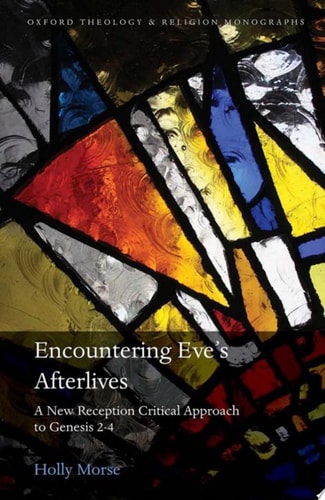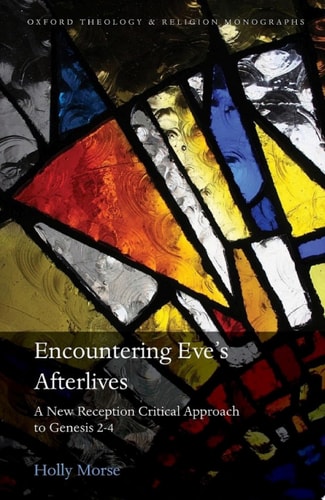
Encountering Eve's Afterlives: A New Reception Critical Approach to Genesis 2-4
0
0
As an Amazon Associate and affiliate partner, Menrva Books earns from qualifying purchases. Learn more
Author Description
Encountering Eve's Afterlives: A New Reception Critical Approach to Genesis 2-4 aims to destabilize the persistently pessimistic framing of Eve as a highly negative symbol of femininity within Western culture by engaging with marginal, and even heretical, interpretations that focus on more positive aspects of her character. In doing so, this book questions the myth that orthodox, popular readings represent the 'true' meaning of the first woman's story, and explores the possibility that previously ignored or muted rewritings of Eve are in fact equally 'valid' interpretations of the biblical text. By staging encounters between the biblical Eve and re-writings of her story, particularly those that help to challenge the interpretative status quo, this book re-frames the first woman using three key themes from her story: sin, knowledge, and life. Thus, it considers how and why the image of Eve as a dangerous temptress has gained considerably more cultural currency than the equally viable pictures of her as a subversive wise woman or as a mourning mother. The book offers a re-evaluation of the meanings and the myths of Eve, deconstructing the dominance of her cultural incarnation as a predominantly flawed female, and reconstructing a more nuanced presentation of the first woman's role in the Bible and beyond.
Menrva's Summary
THE THESIS
This work investigates how the persistent, pessimistic framing of Eve as a negative symbol of femininity can be destabilized by analyzing marginal and heretical interpretations of Genesis 2-4. Holly Morse, a scholar in theology and religion, utilizes a reception-critical methodology to challenge the dominance of orthodox readings. By examining how the biblical text has been rewritten and reinterpreted across history, the author argues that alternative portrayals of Eve—such as the wise woman or the mourning mother—are as valid as the traditional depiction of the dangerous temptress.
THE SCOPE MAP
What You Will Find
- A reception-critical framework applied to Genesis 2-4.
- Analysis of the thematic triad of sin, knowledge, and life.
- Examination of both canonical and non-canonical or heretical interpretations of Eve.
Scope Limits
- The study focuses primarily on Western cultural interpretations rather than a global history of reception.
- The analysis is restricted to the specific narrative arc of Genesis 2-4.
THE AUTHORITY PERSPECTIVE
Scholars in the field of biblical reception history identify this monograph as a significant contribution to gender-critical theology. Readers frequently note the academic density of the prose, which is intended for an audience familiar with theological discourse and literary theory.
Page Count:
249
Publication Date:
2020-01-01
Publisher:
OUP Oxford
ISBN-10:
0192580183
ISBN-13:
9780192580184
Religion
Bible
Literary Criticism
Cultural History
Theology
Gender Studies