Author Description
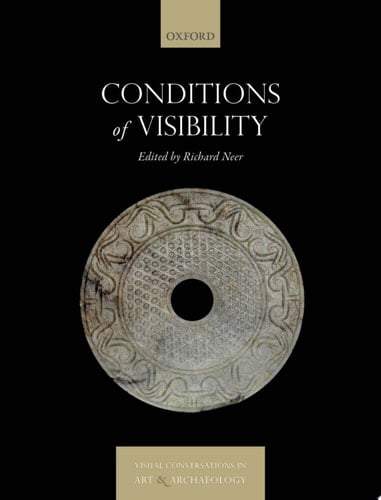
We Often Assume That Works Of Visual Art Are Meant To Be Seen. Yet That Assumption May Be A Modern Prejudice. The Ancient World - From China To Greece, Rome To Mexico - Provides Many Examples Of Statues, Paintings, And Other Images That Were Not Intended To Be Visible. Instead Of Being Displayed, They Were Hidden, Buried, Or Otherwise Obscured. In This Third Volume In The Visual Conversations In Art & Archaeology Series, Leading Scholars Working At The Intersection Of Archaeology And The History Of Art Address The Fundamental Question Of Art's Visibility. What Conditions Must Be Met, What Has To Be In Place, For A Work Of Art To Be Seen At All? The Answer Is Both Historical And Methodological; It Concerns Ancient Societies And Modern Disciplines, And Encompasses Material Circumstances, Perceptual Capacities, Technologies Of Visualization, Protocols Of Classification, And A Great Deal More. The Emerging Field Of Archaeological Art History Is Uniquely Suited To Address Such Questions. Intrinsically Comparative, This Approach Cuts Across Traditional Ethnic, Religious, And Chronological Categories To Confront The Academic Present With The Historical Past. The Goal Is To Produce A New Art History That Is At Once Cosmopolitan In Method And Global In Scope, And In Doing So Establish New Ways Of Seeing - New Conditions Of Visibility - For Shared Objects Of Study.
Menrva's Summary
THE THESIS
This volume investigates the fundamental question of what conditions must be met for a work of art to be perceived, challenging the modern assumption that visual art is inherently intended for display. Richard Neer and a collective of leading scholars in archaeology and art history examine historical instances where objects were intentionally obscured, buried, or hidden. By synthesizing material evidence with methodological inquiry, the contributors argue that visibility is a constructed phenomenon rather than a natural state of art objects.
THE SCOPE MAP
What You Will Find
- Comparative analysis of ancient visual cultures spanning China, Greece, Rome, and Mexico.
- Theoretical frameworks for the emerging field of archaeological art history.
- Examination of the intersection between material circumstances, perceptual capacities, and classification protocols.
Scope Limits
- The text focuses primarily on ancient societies and does not provide an exhaustive survey of contemporary art practices.
- It does not offer a general history of art, but rather a specialized methodological critique of visibility.
THE AUTHORITY PERSPECTIVE
Scholars and students of archaeology and art history recognize this work as a significant contribution to the cross-disciplinary study of material culture. Readers frequently note the academic density of the prose, which is intended for an audience familiar with current debates in archaeological theory.
Page Count:
176
Publication Date:
2019-01-01
ISBN-10:
0192584316
ISBN-13:
9780192584311
Non-Fiction
Academic
Archaeology
Art History
Visual Culture
Community Tags
More from Visual Conversations in Art & Archaeology