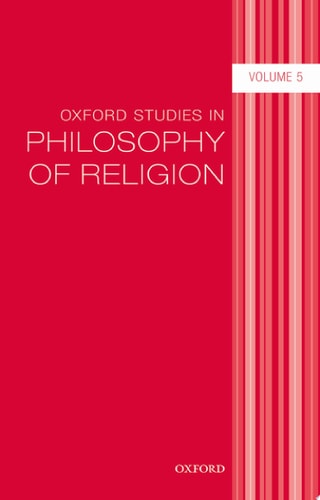
Oxford Studies in Philosophy of Religion: Volume 9
0
0
As an Amazon Associate and affiliate partner, Menrva Books earns from qualifying purchases. Learn more
Author Description
Cover; Oxford Studies In Philosophy Of Religion: Volume 9; Copyright; Contents; Preface; List Of Contributors; 1: Privation In The Problem Of Evil: Impairment, Health, Well-being, And A Case Of Humans And Betazoids; 1. Introduction; 2. The Test Case: Betazoids And Humans; 3. Definitions: Disability, Impairment, And Health; 4. A Solution To The Puzzle; 5. Privative Evils And Theodicy; 6. A Confusion?; 7. Where Are We Now?; Bibliography; 2: What If God Makes Hard Choices?; 1. Swinburne's Model; 2. A Challenge To Swinburne's Model; 3. A New Model; 4. An Advantage; 5. A Disadvantage 3: Theism, Pro-theism, Hasker, And Gratuitous Evil1. Stage-setting; 2. Restrictions On God's Permission Of Evil; 3. Hasker's Case Against (1); 4. Must Gratuitous Evil Occur, Or Must It Merely Be Permitted?; 5. Criticisms Of Hasker's Argument; 5.1 The Strategy Is Self-defeating; 5.2 The Account Of God's Plan For Creation In (e) Is Mistaken; 5.3 If God Were To Prevent All Gratuitous Evil, We Would Neither Know Nor Reasonably Believe That God Had Done So; 5.4 Our Moral Motivations Would Not Be Undermined; 6. Conclusion; Appendix: The Argument From Excessive Gratuitous Evil; References 4: God And Gratuitous Evil: A Response To Klaas Kraay1. Preliminaries; 2. The Nge Defense; 3. The Problem Of Moral Motivation; 4. The Problem Of Excessive Gratuitous Evil; 5. Conclusion; 5: Moral Indulgences: When Offsetting Is Wrong; 0. Introduction; 1. Moral Indulgence; 2. The Moral Status Of Moral Indulgence; 2.1 Two Desiderata And What Can't Meet Them; 2.2 Universalizability And The Second Desideratum; 2.3 Application Of Universalizability And The First Desideratum; 2.4 Cause-matching; 3. Divine Indulgence; 3.1 Background Assumptions; 3.2 Divine Indulgence 3.3 Universalizability And Divergence On The Divine4. Closing Thoughts; Bibliography; 6: Time Of Trial; Time Of Trial; 7: Why Did The One Not Remain Within Itself?; I. Introduction; Ii. A Framework For Our Inquiry; Iii. Why Did God Create?; Iv. Could God Hav
Menrva's Summary
THE THESIS
This volume investigates the intersection of analytic philosophy and religious belief, specifically addressing the logical consistency of theism in the face of moral and existential challenges. The editors, Dean W. Zimmerman, Lara Buchak, and Philip Swenson, curate a collection of peer-reviewed essays that employ rigorous logical frameworks to examine classical theological problems, including the problem of evil, divine decision-making, and the nature of moral responsibility within a theistic worldview.
THE SCOPE MAP
What You Will Find
- Analytical inquiries into the problem of evil and theodicy
- Philosophical models regarding divine choice and moral motivation
- Discussions on the nature of gratuitous evil and divine permission
- Ethical frameworks concerning moral indulgence and offsetting
Scope Limits
- The text does not provide a comprehensive survey of world religions
- It does not address sociological or historical aspects of religious practice
THE AUTHORITY PERSPECTIVE
Experts and scholars in the field of philosophy of religion recognize this series as a primary venue for high-level, contemporary analytical discourse. Readers frequently note the academic density of the prose, which assumes a strong background in formal logic and metaphysical terminology.
Page Count:
336
Publication Date:
2019-01-01
Publisher:
Oxford University Press,
ISBN-10:
0192584235
ISBN-13:
9780192584236
Religion
Philosophy
Metaphysics
Ethics
Theology
Academic
Community Tags
Other Editions(2)
Similar Books
Reader Comments
Share Your Thoughts
No comments yet. Be the first to share your thoughts!