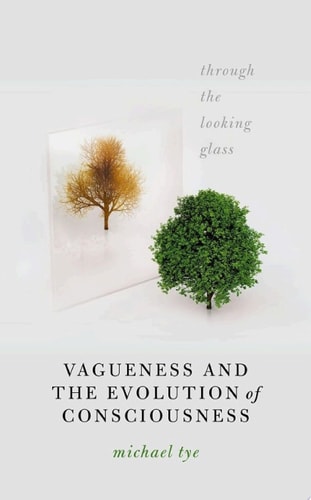
Vagueness and the Evolution of Consciousness: Through the Looking Glass
0
0
As an Amazon Associate and affiliate partner, Menrva Books earns from qualifying purchases. Learn more
Author Description
When Alice stepped through the looking-glass, she encountered a peculiar world where she meets animated chess pieces, characters from nursery rhymes, and talking animals. Everything there is inside out and upside down: so it is with consciousness. Reflecting on the inception of consciousness, it is natural to suppose that there are just two alternatives. Either consciousness appeared in living beings suddenly, like a light switch turning on, or it appeared gradually, like the biological development of life itself, through borderline cases which became the collective experience over time. For the former theory, consciousness is an on/off matter, but once it was there it became richer over time, like a beam of light becoming brighter and broader in its sweep. For the latter theory this is not the case, and there are shades of grey in how consciousness develops. Unfortunately, both alternatives face deep problems. The solution to these problems lies in the realization, strange as it may be, that a key element of consciousness itself was always here, as a fundamental feature of micro-reality. Varying conscious states were not, however: they appeared gradually. In Vagueness and the Evolution of Consciousness, Michael Tye addresses the questions that this raises. Where in the brain is consciousness located? How can consciousness be casually efficacious with respect to behaviour? What is the extent of consciousness in the animal world? How can all of this be so?
Menrva's Summary
THE THESIS
This book investigates the core question of how consciousness emerged in living beings, specifically addressing the paradox of whether it appeared as a sudden binary event or a gradual evolutionary process. Michael Tye, a prominent philosopher of mind, utilizes a framework rooted in the concept of vagueness to argue that while specific conscious states evolved gradually, the fundamental elements of consciousness are inherent features of micro-reality. He reconciles these perspectives by proposing a model that accounts for the transition from basic physical properties to complex subjective experience.
THE SCOPE MAP
What You Will Find
- Analysis of the 'all-or-nothing' versus 'gradualist' theories of consciousness.
- Application of the logic of vagueness to biological and mental development.
- Examination of the causal efficacy of consciousness regarding behavior.
- Discussion on the distribution of consciousness across the animal kingdom.
Scope Limits
- The text does not provide a definitive neurobiological map of every brain region associated with consciousness.
- It does not offer a comprehensive history of evolutionary biology outside of its relevance to mental states.
THE AUTHORITY PERSPECTIVE
Experts in the philosophy of mind recognize this work as a significant contribution to the ongoing debate regarding the nature of mental states and their physical origins. Readers frequently note the technical density of the prose, which requires a foundational understanding of analytic philosophy to fully grasp the author's arguments.
Page Count:
140
Publication Date:
2021-01-01
Publisher:
OUP Oxford
ISBN-10:
0192637061
ISBN-13:
9780192637062
Philosophy
Mind & Body
Evolutionary Biology
Philosophy of
Consciousness
Community Tags
Similar Books