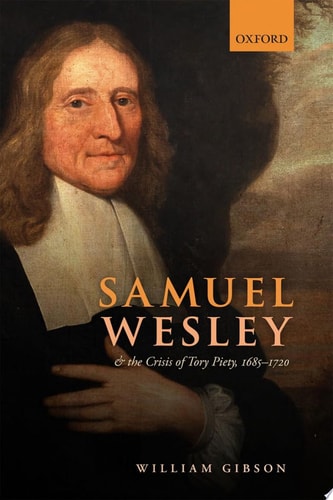
Samuel Wesley and the Crisis of Tory Piety, 1685-1720
0
0
As an Amazon Associate and affiliate partner, Menrva Books earns from qualifying purchases. Learn more
Author Description
Samuel Wesley And The Crisis Of Tory Piety, 1685-1720 Uses The Experiences Of Samuel Wesley (1662-1735) To Examine What Life Was Like In The Church Of England For Tory High Church Clergy. These Clergy Felt Alienated From The Religious And Political Settlement Of 1689 And Found Themselves Facing The Growth Of Religious Toleration. They Often Linked This To A Rise In Immorality And A Sense Of The Decline In Religious Values. Samuel Wesley's Life Saw A Series Of Crises Including His Decision To Leave Dissent And Conform To The Church Of England, His Imprisonment For Debt In 1705, His Shortcomings As A Priest, Disagreements With His Bishop, His Marriage Breakdown And The Haunting Of His Rectory By A Ghost Or Poltergeist. Wesley Was Also A Leading Member Of The Convocation Of The Church During The Crisis Years Of 1710-14. In Each Of These Episodes, Wesley's Toryism And High Church Principles Played A Key Role In His Actions. They Also Show That The Years Between 1685 And 1720 Were Part Of A 'long Glorious Revolution' Which Was Not Confined To 1688-9. This 'long Revolution' Was Experienced By Tory High Church Clergy As A Series Of Turning Points In Which The Whig Forces Strengthened Their Control Of Politics And The Church. Using Newly Discovered Sources, And Providing Fresh Insights Into The Life And Work Of Samuel Wesley, William Gibson Explores The World Of The Tory High Church Clergy In The Period 1685-1720.
Menrva's Summary
THE THESIS
This work investigates how the life and career of Samuel Wesley serve as a microcosm for the broader existential and political crisis faced by Tory High Church clergy following the religious and political settlement of 1689. William Gibson, a scholar of ecclesiastical history, utilizes newly discovered primary sources to analyze the friction between traditional High Church principles and the encroaching tide of religious toleration and Whig political dominance. The text argues that the period between 1685 and 1720 functioned as a 'long Glorious Revolution' that systematically marginalized conservative Anglican clergy.
THE SCOPE MAP
What You Will Find
- An examination of the socio-political climate within the Church of England from 1685 to 1720.
- Analysis of the Convocation of the Church during the critical years of 1710-1714.
- Biographical study of Samuel Wesley, including his conversion from Dissent, his imprisonment for debt, and his domestic struggles.
- Contextualization of the 'long Glorious Revolution' and its impact on Tory identity.
Scope Limits
- The study is primarily focused on the specific experiences of Tory High Church clergy rather than a comprehensive history of the entire Church of England.
- The narrative is bounded by the years 1685 and 1720, excluding later developments in the Wesley family legacy.
THE AUTHORITY PERSPECTIVE
Scholars and historians recognize this work as a significant contribution to the understanding of late Stuart and early Georgian ecclesiastical politics. Readers frequently note the academic density of the prose and the author's meticulous use of archival materials to reconstruct the challenges faced by the Tory clergy.
Page Count:
272
Publication Date:
2021-01-01
Publisher:
Oxford University Press
ISBN-10:
0192642901
ISBN-13:
9780192642905
Religion
History
Biography
Influence Literary artistic etc
Pietism
18th century
Theologians
British History
Church History
Community Tags
Similar Books