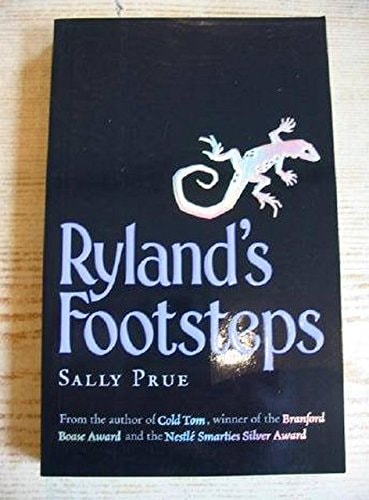
Ryland's Footsteps
0
0
As an Amazon Associate and affiliate partner, Menrva Books earns from qualifying purchases. Learn more
Author Description
Rye's life changes when his father is appointed as Governor of one of the new penal colonies. With his parents, he moves to the Polynesian island, where he expects to be the only child among colony officials, prisoners, and offlanders (the native peoples of the region). However there are two other children there: Kris, who is the son of the offlander chief, and Alice, daughter of one of the prisoners. The three become uneasy friends, despite their parents' very different agendas: Rye's father is destroying the land through his drive to modernize; Kris's father is desperate to maintain the old ways; Alice's father is brewing revolution. With a wide scope and a range of comic and quirky characters, the book has something of the feel of Holes by Louis Sachar, or of the film Oh Brother, Where Art Thou? It deals with the three children realizing they don't have to follow in their parents' footsteps, and tells the story of how they bring the adults closer together and find a way forward for all the people of the island.
Menrva's Summary
THE PULSE
The arrival of three children at a remote penal colony forces them to confront the conflicting agendas of their parents as they navigate a landscape defined by colonial expansion and cultural tension. Rye, the son of the Governor, finds his expectations of isolation upended when he meets Kris, the son of an offlander chief, and Alice, the daughter of a prisoner. As their parents push toward modernization, traditional preservation, and political revolution, the trio must navigate the physical and social constraints of the island. The narrative follows their efforts to forge an independent path, challenging the predetermined roles imposed upon them by their families and the volatile environment of the colony.
INSIDE THE PAGES
- Exploration of intergenerational conflict and parental influence
- Setting centered on a remote Polynesian penal colony
- Multi-perspective narrative focusing on three distinct social backgrounds
- Themes of environmental impact and modernization
- Character-driven plot emphasizing reconciliation over division
- Integration of comic and quirky character archetypes
- Focus on the transition from childhood to independent decision-making
- Examination of colonial dynamics and indigenous relations
THE COLLECTIVE ECHO
Readers often compare the narrative tone and character dynamics to works like Louis Sachar's Holes, noting a similar blend of humor and serious social commentary. Discussion frequently centers on the effectiveness of the three protagonists in bridging the divide between their parents' opposing ideologies. Critics highlight the author's ability to balance a wide scope of characters while maintaining a focus on the children's personal growth. The pacing is generally described as accessible, allowing for a clear exploration of the themes of autonomy and reconciliation. Many readers appreciate how the story avoids simplistic resolutions, instead focusing on the complex process of finding a way forward for a fractured community.
Page Count:
224
Publication Date:
2003-08-31
Publisher:
Oxford University Press
ISBN-10:
0192719491
ISBN-13:
9780192719492
Adventure
Young Adult
Historical Fiction
Contemporary
Coming of Age
Social Issues