Author Description
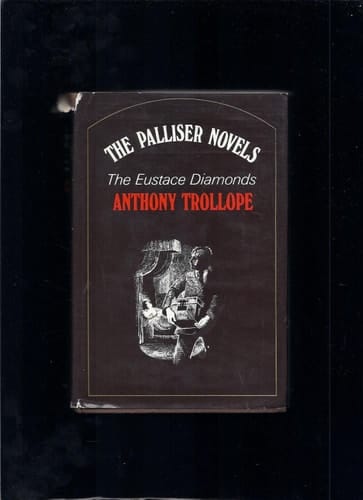
Anthony Trollope's celebrated Parliamentary novels, of which The Eustace Diamonds (1873) is the third and most famous, are at once unfailingly amusing social comedies, melodramas of greed and deception, and precise nature studies of the political animal in its mid-Victorian habitat. With its purloined jewels, its conniving, resilient, mercenary heroine, and its partiality for the human spectacle in all its complexity, The Eustace Diamonds is a splendid example of Trollope's art at its most assured.
Menrva's Summary
THE PULSE
The central conflict ignites when the beautiful and calculating Lizzie Eustace insists on keeping a valuable diamond necklace that her late husband’s family claims is an heirloom. Lizzie Eustace navigates the rigid social hierarchies of mid-Victorian England, employing her wit and charm to secure her financial future against the demands of her husband's aristocratic relatives. The narrative follows her attempts to maintain possession of the disputed jewels while managing the scrutiny of high society and the legal machinations of those seeking to reclaim the property. Trollope utilizes a third-person omniscient perspective to dissect the motivations of his characters, exposing the intersection of greed, reputation, and social standing. The world is defined by the strict moral and legal codes of the 19th-century British upper class, where the possession of wealth serves as the primary currency of power.
INSIDE THE PAGES
- Satirical examination of Victorian social climbing
- Complex legal and financial disputes over inheritance
- Multi-layered character studies of the landed gentry
- Exploration of the tension between public reputation and private desire
- Detailed depiction of the Parliamentary political environment
- Use of irony to highlight the hypocrisy of the elite
- Intricate plotting involving theft and deception
- Focus on the agency of a morally ambiguous female protagonist
THE COLLECTIVE ECHO
Readers and critics frequently highlight the novel's sharp wit and Trollope's ability to create a protagonist who is simultaneously frustrating and compelling. Discussion often centers on the ambiguity of Lizzie Eustace’s character, as she challenges the traditional expectations placed upon women of her era. The pacing is noted for its deliberate, expansive style, which allows for a thorough examination of the social pressures facing the characters. Many observers appreciate the balance between the central mystery of the diamonds and the broader commentary on the political and social structures of the time. The work is widely regarded as a significant example of Victorian realism that avoids simple moralizing in favor of a nuanced portrayal of human behavior.
Page Count:
818
Publication Date:
1984-02-09
ISBN-10:
0192815881
ISBN-13:
9780192815880
Mystery
Social Satire
Victorian
London England
Classic Literature
Political fiction
England
Community Tags
More from Palliser