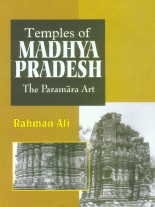
Temples of Madhya Pradesh: The Paramara Art
0
0
As an Amazon Associate and affiliate partner, Menrva Books earns from qualifying purchases. Learn more
Author Description
Book Summary of Temples Of Madhya Pradesh: The Paramara Art In the beginning of 19th century A.D., the scholars had realized the importance of textual norms prescribed for raising the Hindu temples, but only in 20th century A.D., the temples and the sculptural display therein attracted the attentions of the scholars of the world. Later on, it was inspired by the publications of Sanskrit treatise which further encouraged the scholars to realize the significance of textual norms and the symbolism of the Hindu art and architecture. It ultimately compelled the scholars to study the monuments with a new approach. The present book is a result if the new approach of study of analyzing the architectural details of the Bhumija mode of temples often appreciated in the shilpa texts like the Samaranganasutradhara (by Bhoja) of Malwa and the Aparajitaprccha (Bhuvandeva) etc. These temples are built in majority in the land of Malwa a tract spread over a large part of Madhya Pradesh. The style was patronised and favoured by the Paramaras of Dhara (Dist, Dhar, M.P.). Thus, the Bhumija mode of temples were soon favoured and was built in neighbouring regions of Gujarat, Maharashtra and Rajasthan etc. The development of iconography in Malwa and Madhya Pradesh as a whole has been discussed scientifically to reconstruct the coherent history of art of the region. We may, therefore, claim that the book will fulfil the requirements of the scholars concerned and the common man interested in art and culture of India. Contents: Preface Introduction List of Figures List of Plates 1. Origin and Antiquity 2. The Types of Bhumija Temple 3. The Essential Features 4. The Udayesvara Temple 5. Siva Temple, Jamli 6. Group of Eight Temples, UN. 7. Group of Bhumija Temples at Omkara-Mandhata 8. two Bhumija
Menrva's Summary
THE THESIS
The book investigates the architectural details and iconographic development of Bhumija temples, a distinct style patronized by the Paramara dynasty in the Malwa region of Madhya Pradesh. It analyzes these structures through the lens of ancient Sanskrit texts like the Samaranganasutradhara and Aparajitaprccha, tracing the evolution of the Bhumija mode and its spread to neighboring areas. The work aims to reconstruct a coherent history of art and architecture in the region, focusing on the specific contributions of the Paramara period.
THE SCOPE MAP
- Analysis of textual norms for Hindu temple construction.
- Detailed examination of the Bhumija mode of temple architecture.
- Focus on temples patronized by the Paramara rulers of Dhara.
- Discussion of the spread of the Bhumija style to Gujarat, Maharashtra, and Rajasthan.
- Scientific reconstruction of the art history of Malwa and Madhya Pradesh.
- Exploration of the development of iconography in the region.
- Specific case studies including the Udayesvara Temple and Siva Temple, Jamli.
THE AUTHORITY PERSPECTIVE
This book is presented as a scholarly work that addresses the historical and architectural significance of Paramara art in Madhya Pradesh, specifically focusing on the Bhumija temple style. It aims to bridge the gap between ancient textual prescriptions and the physical monuments, offering a new approach to understanding Hindu art and architecture. The book is intended to serve the needs of scholars and individuals interested in Indian art and culture, providing a detailed analysis of regional artistic developments.
Page Count:
203
Publication Date:
1997-01-01
Publisher:
MLBD
ISBN-10:
8175741201
ISBN-13:
9788175741201
Non-Fiction
History
Architecture
Hinduism
Art History
Indian History
Community Tags
Similar Books














