Author Description
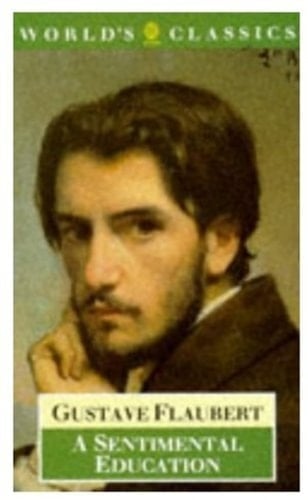
First published in 1869, this novel offers a meticulously accurate, ironic depiction of uneventful lives in a crucial period of European history. Flaubert combines intricate political and social upheaval with a close scrutiny of individual motives to produce one of the greatest novels of the nineteenth century.
Menrva's Summary
THE PULSE
Frédéric Moreau, a young man of modest means, navigates the shifting political landscape of 19th-century France while pursuing an unattainable romantic obsession. Driven by a desire for social advancement and artistic fulfillment, Frédéric encounters a series of disillusioning experiences that mirror the instability of the era. He faces opposition from his own lack of resolve, the rigid class structures of Parisian society, and the volatile political climate of the 1848 Revolution. The narrative framework utilizes a third-person perspective to maintain an ironic distance from the protagonist's internal vacillations.
INSIDE THE PAGES
- Meticulous observation of social manners and bourgeois behavior
- Integration of historical events including the 1848 Revolution
- Ironic narrative tone that critiques the protagonist's passivity
- Detailed descriptions of Parisian urban environments
- Exploration of the conflict between romantic idealism and reality
- Episodic structure reflecting the protagonist's aimless life
- Focus on the psychological stagnation of the central character
- Use of sensory detail to ground the narrative in the mid-19th century
THE COLLECTIVE ECHO
Readers and critics frequently note the novel's commitment to realism and its refusal to provide the traditional narrative arcs found in other works of the period. Discussion often centers on the protagonist's persistent passivity and how his inability to act serves as a commentary on the broader political failures of his generation. Many highlight the precision of Flaubert's prose, which captures the mundane details of life with clinical accuracy. The balance between the intimate character study and the expansive historical backdrop remains a primary point of interest for those examining the evolution of the modern novel. Scholars often emphasize that the work functions as a critique of romanticism, favoring a detached, analytical approach to the human condition.
Page Count:
528
Publication Date:
1990-01-11
ISBN-10:
0192817310
ISBN-13:
9780192817310
classic
French literature
REALISM
Bildungsroman
Historical