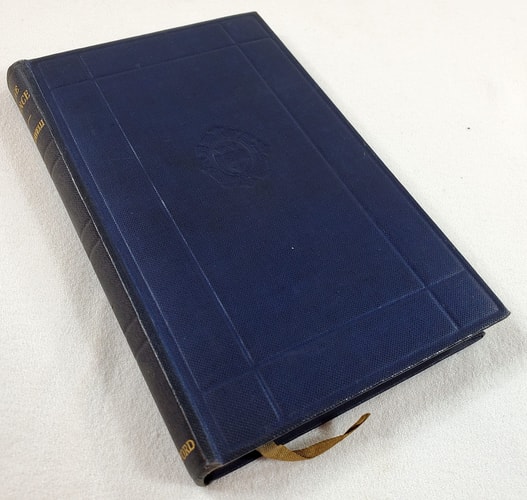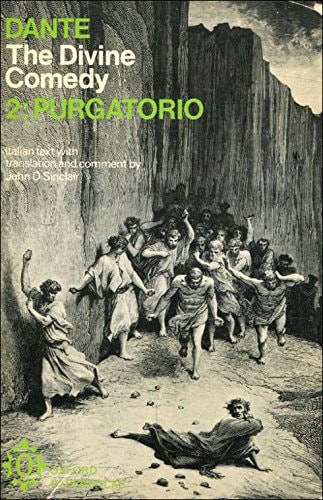
Divine Comedy: Purgatorio
0
0
As an Amazon Associate and affiliate partner, Menrva Books earns from qualifying purchases. Learn more
Author Description
The Divine Comedy describes Dante's descent into Hell with Virgil as a guide; his ascent of Mount Purgatory and encounter with his dead love, Beatrice; and finally, his arrival in Heaven. Examining questions of faith, desire and enlightenment, the poem is a brilliantly nuanced and moving allegory of human redemption.Dante Alighieri was born in Florence in 1265 and belonged to a noble but impoverished family. His life was divided by political duties and poetry, the most of famous of which was inspired by his meeting with Bice Portinari, whom he called Beatrice,including La Vita Nuova and The Divine Comedy. He died in Ravenna in 1321.
Menrva's Summary
THE PULSE
Dante Alighieri navigates the arduous ascent of Mount Purgatory, seeking spiritual purification and the eventual reunion with his beloved Beatrice. Guided by the Roman poet Virgil, the protagonist traverses the seven terraces of Purgatory, each corresponding to one of the seven deadly sins. The narrative framework utilizes terza rima verse to structure the protagonist's internal and external transformation as he sheds his earthly attachments. He faces the physical constraints of a landscape designed for penance, where souls undergo rigorous discipline to prepare for the divine presence. The poem functions as a complex allegory, mapping the human condition through a theological lens that emphasizes the necessity of repentance and moral growth.
INSIDE THE PAGES
- Use of the terza rima rhyme scheme
- Allegorical representation of the seven deadly sins
- Integration of classical mythology and Christian theology
- Detailed topographical description of the mountain of Purgatory
- Philosophical dialogues regarding free will and love
- Encounters with historical and contemporary figures undergoing penance
- Symbolic transition from the darkness of the Inferno to the light of Paradise
- Focus on the psychological state of the penitent soul
THE COLLECTIVE ECHO
Readers and scholars frequently analyze this work for its intricate synthesis of medieval scholasticism and personal narrative. Discussion often centers on the shift in tone from the punitive atmosphere of the previous volume to the hopeful, albeit rigorous, process of spiritual refinement found here. Critics highlight the effectiveness of the poem's structure in mirroring the slow, deliberate nature of moral improvement. Many readers appreciate the balance between the theological density of the text and the vivid, humanizing portraits of the souls encountered on the mountain. The work remains a central point of inquiry for those interested in the evolution of Western literature and the intersection of faith and poetic form.
Page Count:
446
Publication Date:
1971-01-01
Publisher:
Oxford University Press
ISBN-10:
0192811118
ISBN-13:
9780192811110
Philosophy
Religious
classic
Medieval
Epic Poetry
Italian
Community Tags
Similar Books