Author Description
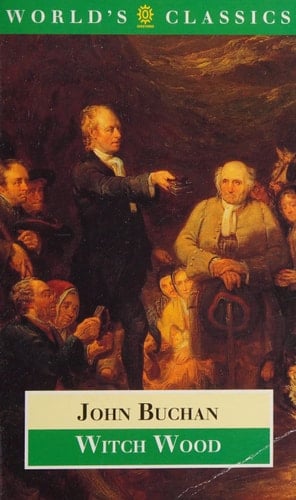
In The Witch Wood (1927) John Buchan brings all the tension of his wartime thrillers to a complex story of witchcraft in the ancient Wood of Caledon in the Scottish Borders. It is a stirring and challenging tale of seventeenth-century devilry, combatted in vain by David Sempill, the parish minister, who is hindered by the hypocrisy of his parishioners and his fellow-ministers' cant. In the background, meanwhile, the civil unrest of the Scottish Wars of the Covenant tears David's loyalties between his love of his calling and his admiration for the Marquis of Montrose, the leading opponent of the extreme Covenanters. Witch Wood also tells a love story that owes much to the ballads Buchan learned from his father and is infused with a subtle, other-worldly longing, nourished by the author's knowledge of Dante, Plato, and Virgil. The Dark Wood is not merely Scottish: it is the classical and medieval symbol for the subliminal powers which challenge reason in every age.
Menrva's Summary
THE PULSE
David Sempill, a parish minister in the seventeenth-century Scottish Borders, confronts a sinister resurgence of ancient witchcraft within the Wood of Caledon while navigating the volatile political landscape of the Wars of the Covenant. Sempill attempts to protect his congregation from both the encroaching influence of devilry and the pervasive hypocrisy of his peers. His objective is complicated by his divided loyalties between his religious duties and his political sympathies for the Marquis of Montrose. The narrative operates within a framework of historical realism, utilizing the tension between rational faith and the primal, subliminal forces of the natural world. The prose reflects the author's classical education, grounding the supernatural elements in a structured, atmospheric environment.
INSIDE THE PAGES
- Exploration of seventeenth-century Scottish religious and political conflict
- Integration of folklore and ballad traditions
- Philosophical references to Dante, Plato, and Virgil
- Examination of institutional hypocrisy within the church
- Atmospheric depiction of the Caledon forest as a symbolic entity
- Romantic subplot woven into the historical narrative
- Conflict between individual conscience and societal expectation
- Detailed portrayal of the Wars of the Covenant
THE COLLECTIVE ECHO
Readers and critics frequently highlight the novel's ability to blend historical accuracy with a haunting, supernatural atmosphere. Discussion often centers on the protagonist's internal struggle as he attempts to reconcile his spiritual calling with the harsh realities of civil war. Many observers note the author's sophisticated use of classical symbolism to represent the darker aspects of the human psyche. The pacing is often described as deliberate, allowing the tension to build alongside the political and religious instability of the era. Readers appreciate the depth of the setting, which serves as both a physical location and a metaphor for the challenges to reason.
Page Count:
366
Publication Date:
1995-01-01
ISBN-10:
0192829416
ISBN-13:
9780192829412
Historical Fiction
Contemporary
Political fiction
Scottish literature
Classic Literature
Supernatural