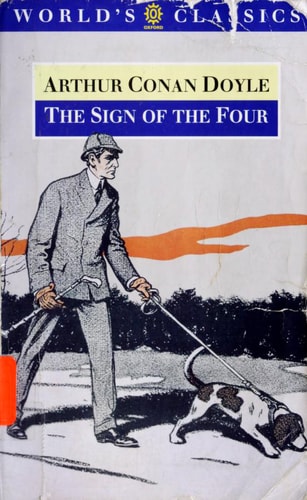
The Sign of the Four
0
0
As an Amazon Associate and affiliate partner, Menrva Books earns from qualifying purchases. Learn more
Author Description
Sherlock Holmes took his bottle from the corner of the mantel-piece and his hypodermic syringe from its neat morocco case. With his long, white, nervous fingers he adjusted the delicate needle, and rolled back his left shirt-cuff. For some little time his eyes rested thought-fully upon the sinewy forearm and wrist all dotted and scarred with innumerable puncture-marks. Finally he thrust the sharp point home, pressed down the tiny piston, and sank back into the velvet-lined arm-chair with a long sigh of satisfaction. Three times a day for many months I had witnessed this performance, but custom had not reconciled my mind to it. On the contrary, from day to day I had become more irritable at the sight, and my conscience swelled nightly within me at the thought that I had lacked the courage to protest. Again and again I had registered a vow that I should deliver my soul upon the subject, but there was that in the cool, nonchalant air of my companion which made him the last man with whom one would care to take anything approaching to a liberty. His great powers, his masterly manner, and the experience which I had had of his many extraordinary qualities, all made me diffident and backward in crossing him.
Menrva's Summary
THE PULSE
A mysterious client arrives at 221B Baker Street, initiating a complex investigation into a long-lost treasure and a series of unexplained deaths. Dr. John Watson and Sherlock Holmes are drawn into a case involving Mary Morstan, whose father vanished years prior under suspicious circumstances. The duo must navigate the fog-drenched streets of London and the intricacies of colonial history to track a elusive figure known as the Sign of the Four. The narrative is presented through Watson's first-person perspective, documenting the logical deduction and forensic methods employed by Holmes to solve the puzzle.
INSIDE THE PAGES
- First-person narrative perspective from Dr. John Watson
- Detailed examination of Victorian London geography
- Focus on forensic science and deductive reasoning
- Exploration of colonial history and its impact on domestic crime
- Introduction of Mary Morstan as a central client
- Pacing centered on investigative discovery and chase sequences
- Character study of Holmes's personal habits and temperament
- Integration of complex clues and red herrings
THE COLLECTIVE ECHO
Readers and critics frequently highlight this work for its pivotal role in establishing the procedural elements of the detective genre. Discussion often centers on the contrast between Watson's moral observations and Holmes's detached, analytical approach to human behavior. The atmosphere of late 19th-century London is noted for its effectiveness in grounding the high-stakes mystery in a tangible, gritty reality. Many observers point to the exploration of imperial themes as a significant layer that distinguishes this entry from other cases in the canon. The balance between character development and the mechanics of the investigation remains a primary focus for those analyzing the evolution of the series.
Page Count:
0
Publication Date:
1999-10-01
Publisher:
Oxford University Press
ISBN-10:
0192837362
ISBN-13:
9780192837363
Mystery
Crime
Victorian
classic
Mystery fiction
Detective
Community Tags
Other Editions(56)

Repro India Limited
2023
Default edition
Independently Published
2020
East India Publishing Company
2020

Independently Published
2020
Independently Published
2020

Independently Published
2020

Independently Published
2020

Independently Published
2020
Independently Published
2019
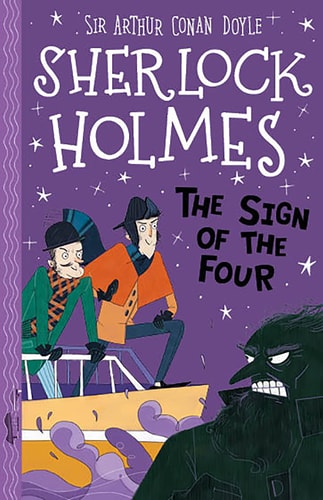
Sweet Cherry Publishing
2019
Blurb, Incorporated
2019

Independently Published
2019

Independently Published
2019
Independently Published
2018
Lulu.com
2018

Independently Published
2018
CreateSpace Independent Publishing Platform
2018

CreateSpace Independent Publishing Platform
2018

CreateSpace Independent Publishing Platform
2018
CreateSpace Independent Publishing Platform
2018

CreateSpace Independent Publishing Platform
2018
CreateSpace Independent Publishing Platform
2017
CreateSpace Independent Publishing Platform
2017

CreateSpace Independent Publishing Platform
2017
Independently Published
2017

CreateSpace Independent Publishing Platform
2017
CreateSpace Independent Publishing Platform
2017
Independently Published
2017

CreateSpace Independent Publishing Platform
2017

CreateSpace Independent Publishing Platform
2017

CreateSpace Independent Publishing Platform
2017

CreateSpace Independent Publishing Platform
2017

CreateSpace Independent Publishing Platform
2017
CreateSpace Independent Publishing Platform
2017
CreateSpace Independent Publishing Platform
2017

CreateSpace Independent Publishing Platform
2017
CreateSpace Independent Publishing Platform
2017

CreateSpace Independent Publishing Platform
2017
CreateSpace Independent Publishing Platform
2017
CreateSpace Independent Publishing Platform
2016

CreateSpace Independent Publishing Platform
2016
CreateSpace Independent Publishing Platform
2016
CreateSpace Independent Publishing Platform
2016

CreateSpace Independent Publishing Platform
2016
CreateSpace Independent Publishing Platform
2016
CreateSpace Independent Publishing Platform
2014
CreateSpace Independent Publishing Platform
2014
CreateSpace Independent Publishing Platform
2014
CreateSpace Independent Publishing Platform
2013
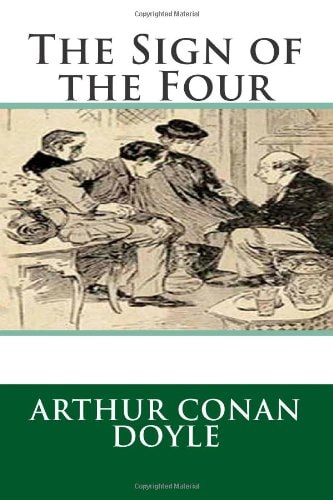
CreateSpace Independent Publishing Platform
2012

CreateSpace Independent Publishing Platform
2010
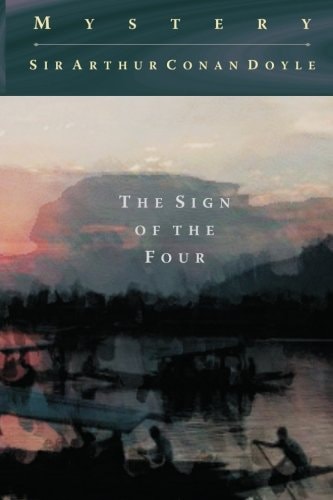
CreateSpace Independent Publishing Platform
2010

IndyPublish.com
2002
Oxford University Press
1999
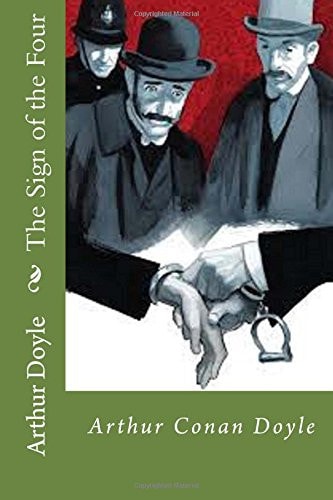
CreateSpace Independent Publishing Platform
1890

CreateSpace Independent Publishing Platform
1890
Similar Books
Reader Comments
Share Your Thoughts
No comments yet. Be the first to share your thoughts!