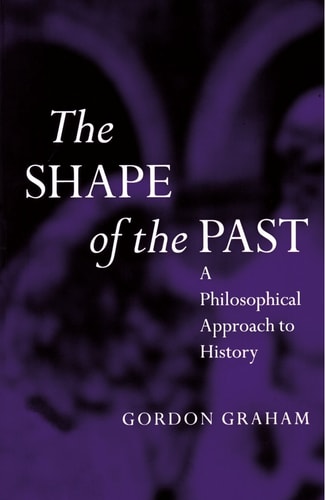
The Shape of the Past: A Philosophical Approach to History
0
0
As an Amazon Associate and affiliate partner, Menrva Books earns from qualifying purchases. Learn more
Author Description
Can human history as a whole be interpreted in any meaningful way? Has there been real progress between stone age and space age? Does history repeat itself? Is there evidence of divine providence? Questions such as these have fascinated thinkers, and some of the greatest philosophers, notably Kant and Hegel, have turned their minds to philosophical history. As a branch of philosophy, however, it has received little attention in the analytical tradition. This pioneering work aims to bring the methods of analytical philosophy to the critical examination of some of these questions. In addition to the thought of Hegel and Kant, the discussion ranges over the writings of Augustine, Machiavelli, and Alasdair MacIntyre, providing a readable introduction to the philosophy of history.
Menrva's Summary
THE THESIS
This work investigates whether human history can be interpreted as a coherent, meaningful process through the lens of analytical philosophy. Gordon Graham, a scholar of philosophy, applies rigorous analytical methods to traditional questions regarding historical progress, cyclical patterns, and teleology. By examining the works of major thinkers like Kant, Hegel, Augustine, and MacIntyre, the author seeks to bridge the gap between speculative philosophy of history and modern analytical inquiry.
THE SCOPE MAP
What You Will Find
- Comparative analysis of historical interpretations by Kant, Hegel, Augustine, and Machiavelli
- Examination of the concept of historical progress from the Stone Age to the modern era
- Application of analytical philosophical methods to historical teleology
- Discussion of divine providence and cyclical historical patterns
Scope Limits
- The text does not provide a comprehensive survey of all historical philosophies
- It focuses primarily on the analytical tradition rather than continental or postmodern historical critiques
THE AUTHORITY PERSPECTIVE
Experts identify this text as a useful introductory bridge for students interested in the intersection of historical theory and analytical philosophy. Readers frequently note that the prose remains accessible while maintaining the logical rigor expected of the subject matter.
Page Count:
256
Publication Date:
1997-03-27
Publisher:
Oxford University Press
ISBN-10:
019289255X
ISBN-13:
9780192892553
Philosophy
History
Non-Fiction
Philosophy history
Analytical Philosophy
History
Community Tags
Similar Books