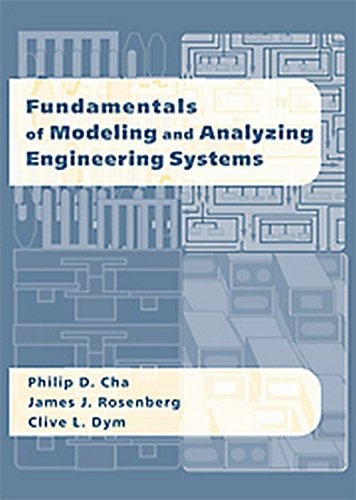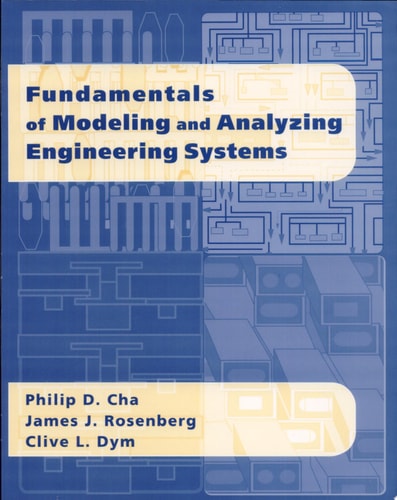
Fundamentals of Modeling and Analyzing Engineering Systems
0
0
As an Amazon Associate and affiliate partner, Menrva Books earns from qualifying purchases. Learn more
Author Description
System modeling and analysis is a standard activity in every engineering discipline. This text offers a broad-based introduction to engineering systems, incorporating material from mechanical, electrical, aerospace, and chemical engineering. The overall theme that distinguishes the text from others is its unified treatment of disparate physical systems, emphasizing similarities in both the modeling and behaviour of lumped-element systems. Linear graph theory provides the framework for modeling engineering systems as lumped elements. The analysis of system dynamics that follows is organized by behavioral characteristics rather than by engineering subdisciplines. Next, the Laplace transform is introduced as a tool for understanding frequency response. The final chapter covers feedback systems. Every chapter includes a wide variety of examples, as well as exercise problems, drawn from real-world mechanical, electrical, hydraulic, chemical, and thermal systems. Aimed at second and third year undergraduates, this introductory text offers a unified entry to the multidisciplinary world of engineering.
Menrva's Summary
THE THESIS
This text provides a unified introduction to the modeling and analysis of engineering systems across multiple disciplines. The authors, drawing from mechanical, electrical, aerospace, and chemical engineering, emphasize the similarities in lumped-element systems. Linear graph theory serves as the foundational framework for modeling, followed by an analysis of system dynamics organized by behavioral characteristics. The text then introduces the Laplace transform for frequency response understanding and concludes with feedback systems, all supported by diverse real-world examples and exercises.
THE SCOPE MAP
- Unified treatment of disparate physical systems (mechanical, electrical, aerospace, chemical)
- Modeling framework based on linear graph theory
- Analysis of system dynamics organized by behavioral characteristics
- Introduction to Laplace transform for frequency response
- Coverage of feedback systems
- Numerous examples and exercise problems from real-world systems (mechanical, electrical, hydraulic, chemical, thermal)
THE AUTHORITY PERSPECTIVE
Aimed at second and third-year undergraduates, this textbook offers a comprehensive and unified approach to engineering systems analysis. The integration of concepts from various engineering disciplines, underpinned by linear graph theory and behavioral analysis, provides a robust foundation for students. The inclusion of practical examples and exercises ensures that theoretical concepts are grounded in real-world applications, making it a valuable resource for multidisciplinary engineering education.
Page Count:
466
Publication Date:
2000-04-13
Publisher:
Cambridge University Press
ISBN-10:
0521594634
ISBN-13:
9780521594639
Science
Non-Fiction
textbook
Chemical Engineering
Aerospace Engineering
Engineering
Electrical Engineering
Community Tags
Similar Books