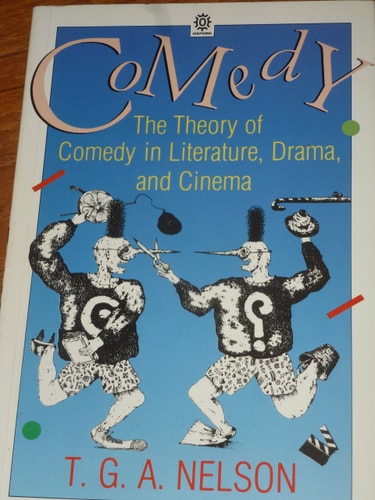
Comedy: An Introduction to Comedy in Literature, Drama, and Cinema
0
0
As an Amazon Associate and affiliate partner, Menrva Books earns from qualifying purchases. Learn more
Author Description
From Plautus, Cervantes, and Charles Dickens to Evelyn Waugh, Joseph Heller, and Tom Stoppard, from A Midsummer Night's Dream to Arsenic and Old Lace and Woody Allen, this concise and readable book provides a thorough introduction to comic criticism. Nelson argues that there are significant recurring patterns of comedy, both in the classics and in more popular and commercial works. He discusses such themes as the link between comedy and carnival, the apparent obsession of modern writers with linguistic comedy, and the dilemma of feminists faced with traditional comedy that is largely sexist in nature.
Menrva's Summary
THE THESIS
This book investigates the recurring patterns and structural mechanics that define comedy across literature, drama, and cinema. T.G.A. Nelson, a scholar of dramatic literature, utilizes a comparative approach to analyze comic works ranging from classical antiquity to contemporary film. He posits that despite the vast chronological and medium-based differences, comedy relies on consistent thematic frameworks and social functions that remain recognizable to audiences across eras.
THE SCOPE MAP
What You Will Find
- Analysis of comic traditions from Plautus and Cervantes to modern figures like Woody Allen.
- Examination of the relationship between comedy and the concept of the carnival.
- Discussion of linguistic comedy and its prevalence in modern writing.
- Critical inquiry into the intersection of feminist theory and traditional, often sexist, comic tropes.
Scope Limits
- The text does not provide an exhaustive history of every comic work ever produced.
- It does not focus on the psychological mechanics of laughter or humor theory in a biological sense.
THE AUTHORITY PERSPECTIVE
Critics and academics frequently cite this work as a highly accessible entry point for students interested in the structural analysis of humor. The text is noted for its ability to synthesize complex literary theory into a readable format that bridges the gap between classical drama and modern cinema.
Page Count:
208
Publication Date:
1990-07-12
Publisher:
Oxford University Press
ISBN-10:
0192892207
ISBN-13:
9780192892201
Comedy Theory
Drama Studies
Comedy
Film Studies
Humor General
Literary Criticism
Community Tags
Similar Books