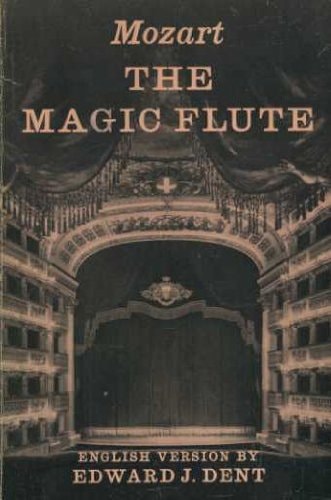
The Magic Flute: Libretto
0
0
As an Amazon Associate and affiliate partner, Menrva Books earns from qualifying purchases. Learn more
Author Description
Mozart's "fairy-tale opera" is one of the most beloved works in the repertory. It is a favorite for children's first exposure to opera as it is an enchanting work jammed with melodies that are both noble and playful. The Magic Flute is also one of the most problematic works in the repertory, full of staging difficulties (the hero enters, pursued by a monstrous serpent, and promptly faints--not very heroic of him) and some elements that seem unpleasantly sexist and racist to today's sensibilities. And there's the perennial malcontent who's all too eager to point out that The Magic Flute is not really a grand opera in any case, but a mere singspiel, with spoken dialogue and coarse comedy, no better than an operetta. And what's with all the Masonic imagery?The story certainly has problems, but the score--one of Mozart's last--overcomes them all as surely as the Three Ladies scrag the serpent and Sarastro and the forces of truth and reason overcome the wicked Queen of the Night. This music has it all, from the heroic notes of Sarastro and the priests to the humor of the bird catcher Papageno. Don't overlook the wonderful ensembles of the Drei Damen and Drei Knaben; Mozart blends trios of soprano voices in a way that's undiluted magic, and that no one even came close to imitating until more than two centuries later, when Richard Strauss took the master's lessons to heart.You can examine for yourself just how Mozart achieved his effect with this full orchestral score from Dover. It's a reprint of another publisher's out-of-copyright score (C.F. Peters of Leipzig, in this particular case); also, there's not a word of English in it once you get past Dover's title pages and the translation of the table of contents that they've thoughtfully provided. What you will get is all of the instrumental parts (note that most pianists will be unable to do much with this score!), all of the vocal parts, and acres of uncut German dialogue. Dover scores are a reasonably priced resource fo
Menrva's Summary
THE PULSE
Prince Tamino is thrust into a perilous quest to rescue Princess Pamina from the clutches of the Queen of the Night, aided only by a magical flute and a reluctant bird-catcher. Tasked by the Queen to retrieve her daughter, Tamino must navigate a series of trials set by the high priest Sarastro to prove his worthiness and wisdom. He is accompanied by Papageno, whose primary objective is to find a mate rather than pursue enlightenment. The narrative unfolds through a blend of spoken dialogue and musical numbers, alternating between high-minded philosophical tests and low-brow comedic relief. The world operates on the logic of fairy-tale archetypes, where moral clarity is tested through trials of silence, fire, and water.
INSIDE THE PAGES
- Singspiel structure alternating between spoken dialogue and musical arias
- Allegorical representation of Enlightenment ideals and Masonic symbolism
- Archetypal character roles including the noble prince, the comic sidekick, and the villainous queen
- High-register coloratura vocal demands for the Queen of the Night
- Ensemble-focused compositions for the Three Ladies and Three Boys
- Thematic focus on the dichotomy between darkness and light
- Integration of supernatural elements and magical artifacts
- Exploration of moral initiation and the pursuit of wisdom
THE COLLECTIVE ECHO
Discussion often centers on the inherent tension between the work's whimsical, fairy-tale exterior and its underlying complex Masonic symbolism. Readers and critics frequently highlight the stark contrast between the virtuosic, demanding arias and the coarse, populist humor of the spoken dialogue. Many analyses focus on the evolution of the characters, particularly the shift in the Queen of the Night's portrayal from a grieving mother to a vengeful antagonist. The work remains a subject of intense debate regarding its historical gender and racial representations, which continue to challenge modern audiences. Ultimately, the score is widely regarded as a pinnacle of musical composition that successfully unifies disparate tonal and dramatic elements into a cohesive experience.
Page Count:
66
Publication Date:
1937-12-01
Publisher:
Oxford University Press
ISBN-10:
0193133105
ISBN-13:
9780193133105
Reference
Opera
Songbooks
Music History
Libretto
Community Tags
Similar Books

Reader Comments
Share Your Thoughts
No comments yet. Be the first to share your thoughts!