The Operas of Charles Gounod
0
0
As an Amazon Associate and affiliate partner, Menrva Books earns from qualifying purchases. Learn more
Author Description
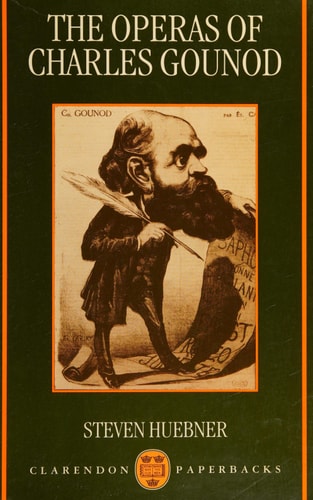
Gounod was the leading opera composer in France in the mid-nineteenth century, and his best-known operas, including Faust and Romeo and Juliette, date from that time. Despite the overwhelming success of Faust and Gounod's immense influence on all French composers of the later nineteenth century, he has been virtually ignored by scholars until now. Huebner here charts the composer's career and deals with each of the major operas, discussing not only the music but also the critical reception and source material. He considers aspects of the composer's musical style and outlines his influence on subsequent generations of composers.
Menrva's Summary
THE THESIS
This work investigates the historical significance and musical evolution of Charles Gounod, challenging the scholarly neglect of a composer who dominated the mid-nineteenth-century French operatic landscape. Steven Huebner, a musicologist, utilizes a comprehensive analysis of Gounod's scores, contemporary critical reception, and original source materials to re-evaluate the composer's artistic output. The book establishes a framework for understanding Gounod's stylistic development and his profound influence on the trajectory of French music in the late nineteenth century.
THE SCOPE MAP
What You Will Find
- Detailed musical and structural analysis of Gounod's major operas, including Faust and Romeo and Juliette
- Examination of the critical reception and cultural context surrounding Gounod's premieres
- Analysis of source materials and libretti used by the composer
- Discussion of Gounod's stylistic evolution and his impact on subsequent generations of French composers
Scope Limits
- Does not provide a comprehensive biography of Gounod's personal life outside of his professional career
- Does not cover Gounod's non-operatic works in significant depth
THE AUTHORITY PERSPECTIVE
Scholars and music historians recognize this text as a foundational resource for understanding the transition of French opera in the nineteenth century. Readers frequently note the academic rigor and technical depth of the musical analysis provided by the author.
Page Count:
336
Publication Date:
1990-09-06
Publisher:
Oxford University Press
ISBN-10:
0193153297
ISBN-13:
9780193153295
Biography
Music
Opera
Opera_france
French Music
Music History
Criticism history
Community Tags
Similar Books