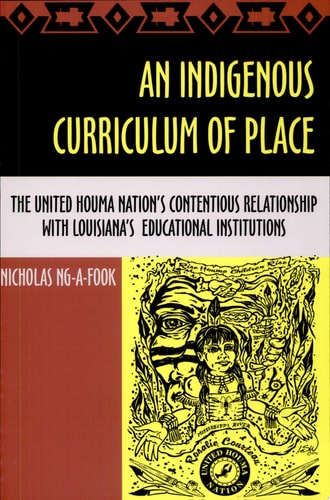
An Indigenous Curriculum of Place: The United Houma Nation's Contentious Relationship with Louisiana's Educational Institutions
0
0
As an Amazon Associate and affiliate partner, Menrva Books earns from qualifying purchases. Learn more
Author Description
The longest desegregation lawsuit in American history, involving Louisiana's political, judicial and educational institutions, was recently settled. Like many African-American communities in the south, members of the United Houma Nation did not have access to "White" systems of public education, or to African-American schools, until the mid-1960s. This book illustrates how the Louisiana state apparatus historically dictated educational exclusion through its infamous Jim Crow policies of racial segregation. Utilizing a combination of ethnography, historiography, and oral history methods, its research narratives are specifically concerned with the life histories of United Houma Nation elders who experienced firsthand the complexities and difficulties of institutional racism. An Indigenous Curriculum of Place is essential reading for curriculum scholars, teachers, and community leaders. The narratives in this book not only have the potential to teach us about alternative ways of knowing, but also to understand the limits of our colonized worldviews.
Menrva's Summary
THE THESIS
This book investigates the historical exclusion of the United Houma Nation from Louisiana's public education system and their ongoing struggle for educational equity. The United Houma Nation, like many marginalized communities, faced systemic segregation and denial of access to educational institutions until the mid-1960s, a direct result of Jim Crow policies. Through ethnography, historiography, and oral histories, the research centers on the lived experiences of elders who navigated institutional racism. The book argues for alternative ways of knowing and challenges colonized worldviews, offering critical insights into the limitations of dominant educational paradigms.
THE SCOPE MAP
- The history of educational exclusion faced by the United Houma Nation.
- Analysis of Jim Crow policies and their impact on Indigenous education.
- Ethnographic, historiographic, and oral history research methods.
- Life histories of United Houma Nation elders detailing experiences with institutional racism.
- Exploration of alternative ways of knowing and decolonizing worldviews.
- The long desegregation lawsuit involving Louisiana's political, judicial, and educational institutions.
THE AUTHORITY PERSPECTIVE
The book is presented as essential reading for curriculum scholars, teachers, and community leaders, highlighting its potential to offer alternative perspectives on knowledge and challenge existing worldviews. The research methodology, combining ethnography, historiography, and oral history, focuses on the direct experiences of United Houma Nation elders. Its examination of systemic educational exclusion and institutional racism is framed as crucial for understanding the limits of colonized perspectives. The work aims to illuminate alternative ways of knowing derived from Indigenous experiences.
Page Count:
232
Publication Date:
2007-01-01
Publisher:
Peter Lang
ISBN-10:
1433100134
ISBN-13:
9781433100130
Non-Fiction
History
Social justice
Education
Community Tags
Similar Books