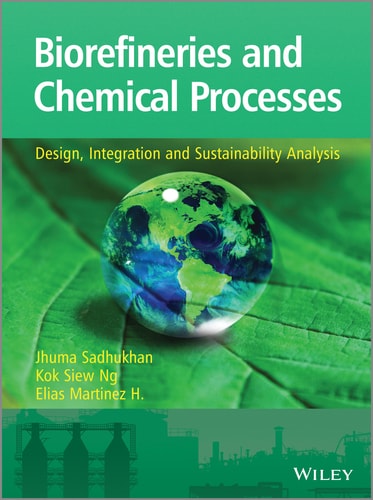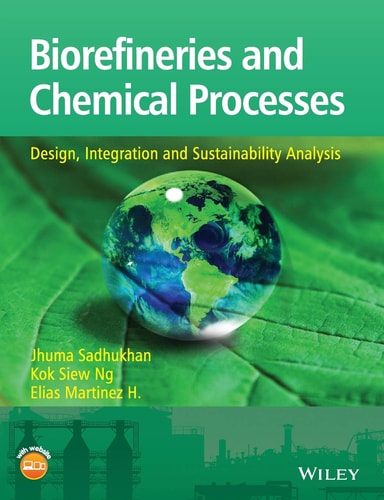
Biorefineries and Chemical Processes: Design, Integration and Sustainability Analysis
0
0
As an Amazon Associate and affiliate partner, Menrva Books earns from qualifying purchases. Learn more
Author Description
As the range of feedstocks, process technologies and products expand, biorefineries will become increasingly complex manufacturing systems. Biorefineries and Chemical Processes: Design, Integration and Sustainability Analysis presents process modelling and integration, and whole system life cycle analysis tools for the synthesis, design, operation and sustainable development of biorefinery and chemical processes. Topics covered include: Introduction: An introduction to the concept and development of biorefineries. Tools: Included here are the methods for detailed economic and environmental impact analyses; combined economic value and environmental impact analysis; life cycle assessment (LCA); multi-criteria analysis; heat integration and utility system design; mathematical programming based optimization and genetic algorithms. Process synthesis and design: Focuses on modern unit operations and innovative process flowsheets. Discusses thermochemical and biochemical processing of biomass, production of chemicals and polymers from biomass, and processes for carbon dioxide capture. Biorefinery systems: Presents biorefinery process synthesis using whole system analysis. Discusses bio-oil and algae biorefineries, integrated fuel cells and renewables, and heterogeneous catalytic reactors. Companion website: Four case studies, additional exercises and examples are available online, together with three supplementary chapters which address waste and emission minimization, energy storage and control systems, and the optimization and reuse of water. This textbook is designed to bridge a gap between engineering design and sustainability assessment, for advanced students and practicing process designers and engineers.
Menrva's Summary
THE THESIS
This book investigates the design, integration, and sustainability analysis of biorefineries and chemical processes. It addresses the increasing complexity of biorefineries by presenting process modeling, integration, and whole-system life cycle analysis tools. The authors aim to bridge the gap between engineering design and sustainability assessment for advanced students and practicing engineers, covering economic and environmental impact analyses, process synthesis, and various biorefinery system configurations.
THE SCOPE MAP
- Introduction to the concept and development of biorefineries.
- Methods for detailed economic and environmental impact analyses.
- Life Cycle Assessment (LCA) and multi-criteria analysis.
- Heat integration and utility system design.
- Mathematical programming based optimization and genetic algorithms.
- Process synthesis and design for modern unit operations and innovative process flowsheets.
- Thermochemical and biochemical processing of biomass, and production of chemicals and polymers from biomass.
- Biorefinery systems including bio-oil, algae, integrated fuel cells, and catalytic reactors.
THE AUTHORITY PERSPECTIVE
This textbook is designed to bridge a gap between engineering design and sustainability assessment for advanced students and practicing process designers and engineers. The content covers a comprehensive range of tools and methodologies for analyzing and optimizing biorefinery and chemical processes. The inclusion of case studies, exercises, and supplementary chapters on a companion website enhances its utility as an educational resource. The book is structured to provide a thorough understanding of both the technical and environmental aspects of modern process design.
Page Count:
688
Publication Date:
2014-11-03
Publisher:
John Wiley & Sons
ISBN-10:
1119990866
ISBN-13:
9781119990864
Science
Non-Fiction
Chemical Engineering
Process Design
Sustainability
Community Tags
Similar Books