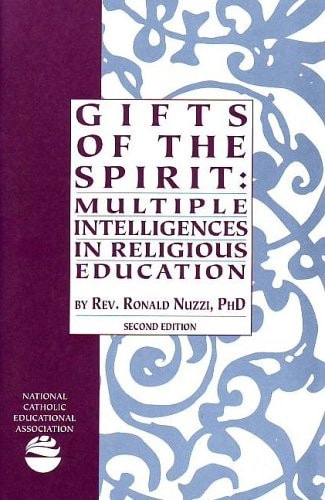
Gifts of the Spirit Multiple Intelligences in Religious Education
0
0
As an Amazon Associate and affiliate partner, Menrva Books earns from qualifying purchases. Learn more
Author Description
This booklet provides practical direction for religious educators that they might effectively teach heterogeneous groups of learners by employing a broad range of teaching/learning approaches while keeping in the forefront the importance of basing practice on sound theory. The booklet begins with a clear explication of the essential attributes of Howard Gardner's theory of multiple intelligences. It explains each of the eight types of intelligence (linguistic, musical, logical-mathematical, spatial, bodily-kinesthetic, interpersonal, intrapersonal, naturalistic); presents suggestions for engaging students in each intelligence area; and provides sample lessons calling for the application of different intelligences at educational levels, ranging from early childhood through adulthood. In addition, the booklet offers a variety of strategies that are applicable across the curriculum. In one section that focuses on the Mass, the booklet presents practical ways that teachers can initiate student involvement with multiple intelligence theory and practice. It closes with an explanation of how the celebration of the Mass calls upon the application of all types of intelligence and serves to animate the multiple intelligences theory in a highly experiential way. (Contains 21 references.) (BT)
Page Count:
69
Publication Date:
1999-01-01
Publisher:
National Catholic Educational Association
ISBN-10:
1558332367
ISBN-13:
9781558332362