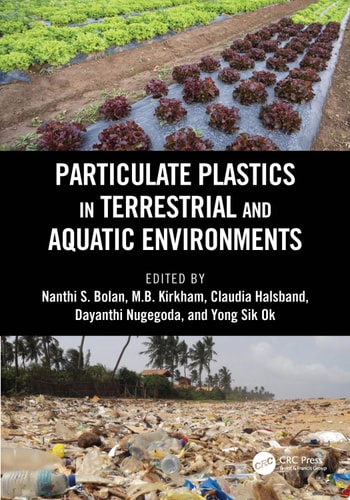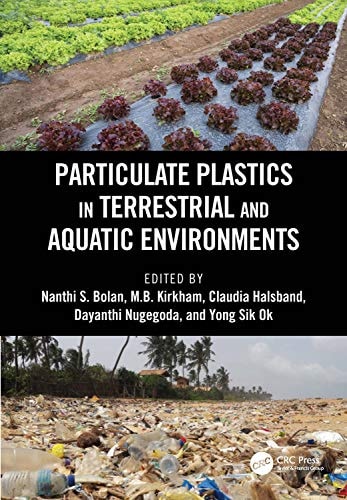
Particulate Plastics in Terrestrial and Aquatic Environments
0
0
As an Amazon Associate and affiliate partner, Menrva Books earns from qualifying purchases. Learn more
Author Description
The manufacture of plastic as well as its indiscriminate disposal and destruction by incineration pollutes atmospheric, terrestrial, and aquatic ecosystems. Synthetic plastics do not break down; they accumulate in the environment as macro-, micro-, and nanoplastics. These particulate plastics are a major source of pollutants in soil and marine ecosystems. Particulate Plastics in Terrestrial and Aquatic Environments provides a fundamental understanding of the sources of these plastics and the threats they pose to the environment. The book demonstrates the ecotoxicity of particulate plastics using case studies and offers management practices to mitigate particulate plastic contamination in the environment. Features · Describes physical and chemical properties of particulate plastics in terrestrial and aquatic ecosystems · Presents information on characteristics of particulate plastics as impacted by weathering processes · Provides numerous approaches for managing particulate plastic contamination · Identifies sources of particulate plastics in the environment; distribution and characteristics of particulate plastics; and management strategies of particulate plastics Written by a global team of scientists, this book is for researchers in the fields of environmental safety and waste management or individuals interested in the impact of particulate plastics on environmental health.
Menrva's Summary
THE THESIS
This book investigates the pervasive issue of particulate plastics, from their origins to their detrimental effects on terrestrial and aquatic ecosystems. The authors, a global team of scientists, detail the sources, distribution, and characteristics of macro-, micro-, and nanoplastics, emphasizing their accumulation due to plastic's non-degradable nature. The book presents case studies demonstrating the ecotoxicity of these pollutants and outlines management practices aimed at mitigating environmental contamination.
THE SCOPE MAP
- Describes the physical and chemical properties of particulate plastics in terrestrial and aquatic ecosystems.
- Presents information on the characteristics of particulate plastics as impacted by weathering processes.
- Provides numerous approaches for managing particulate plastic contamination.
- Identifies sources of particulate plastics in the environment.
- Details the distribution and characteristics of particulate plastics.
- Outlines management strategies for particulate plastics.
THE AUTHORITY PERSPECTIVE
This book is positioned as a fundamental resource for researchers in environmental safety and waste management, as well as individuals concerned with environmental health. Its comprehensive approach, covering sources, properties, ecotoxicity, and management strategies, suggests it aims to provide a thorough understanding of the particulate plastic problem. The inclusion of case studies and practical management practices indicates a focus on both scientific understanding and actionable solutions.
Page Count:
442
Publication Date:
2020-01-01
Publisher:
CRC Press, Taylor & Francis Group
ISBN-10:
1138543926
ISBN-13:
9781138543928
Science
Non-Fiction
Soil Science
Marine Biology
Pollution
Ecotoxicology
Community Tags
Similar Books