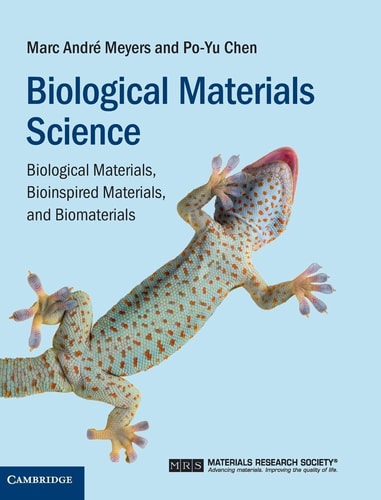
Biological Materials Science: Biological Materials, Bioinspired Materials, and Biomaterials
0
0
As an Amazon Associate and affiliate partner, Menrva Books earns from qualifying purchases. Learn more
Author Description
Taking a unique materials science approach, this text introduces students to the basic concepts and applications of materials and biomedical engineering and prepares them for the challenges of the new interdisciplinary field of biomaterials science. Split into three sections - Basic Biology Principles, Biological Materials, and Bioinspired Materials and Biomimetics - it presents biological materials along with the structural and functional classification of biopolymers, bioelastomers, foams, and ceramic composites. More traditional biomimetic designs such as Velcro are then discussed in conjunction with new developments that mimic the structure of biological materials at the molecular level, mixing nanoscale with biomolecular designs. Bioinspired design of materials and structures is also covered. Focused presentations of biomaterials are presented throughout the text in succinct boxes, emphasising biomedical applications, whilst the basic principles of biology are explained, so no prior knowledge is required. The topics are supported by approximately 500 illustrations, solved problems, and end-of-chapter exercises.
Menrva's Summary
THE THESIS
This text investigates the fundamental principles and applications of materials science within the context of biological and biomedical engineering. It is structured into three core sections: Basic Biology Principles, Biological Materials, and Bioinspired Materials and Biomimetics. The book aims to equip students with knowledge of biomaterials science by presenting biological materials, their structural and functional classifications, and exploring both traditional and novel biomimetic designs, including those at the molecular level.
THE SCOPE MAP
- Coverage of basic biology principles, requiring no prior knowledge.
- Detailed examination of biological materials including biopolymers, bioelastomers, foams, and ceramic composites.
- Exploration of bioinspired designs, from established examples like Velcro to advanced molecular-level mimicry.
- Succinct boxes highlighting specific biomaterials and their biomedical applications.
- Integration of nanoscale and biomolecular designs in bioinspired materials.
- Discussion of bioinspired design of materials and structures.
- Approximately 500 illustrations to support the text.
- Solved problems and end-of-chapter exercises for practice.
THE AUTHORITY PERSPECTIVE
The book is designed as a comprehensive introduction to biomaterials science for students in materials science and biomedical engineering. Its approach integrates basic biology with advanced materials concepts, aiming to bridge the gap between these disciplines. The inclusion of numerous illustrations, solved problems, and exercises suggests a pedagogical focus intended to facilitate learning and application of the material. The text's structure and content indicate a thorough exploration of both naturally occurring biological materials and engineered bioinspired alternatives.
Page Count:
628
Publication Date:
2014-07-31
Publisher:
Cambridge University Press
ISBN-10:
1107010454
ISBN-13:
9781107010451
Non-Fiction
Science
Biomaterials
Biomedical Engineering
Community Tags
Similar Books