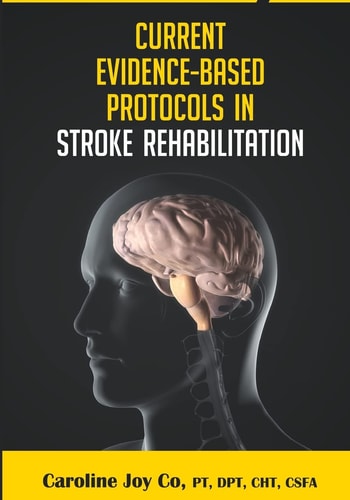
Current Evidence Based Protocols in Stroke Rehabilitation
0
0
As an Amazon Associate and affiliate partner, Menrva Books earns from qualifying purchases. Learn more
Author Description
Course Description This book was developed to help facilities put in place a stroke rehabilitation protocol that is evidence-based, designed to achieve maximum functionality, and aimed at improving patient quality of life. This book will guide clinicians in determining the best interventions for their patients, better stratifying stroke patients, reducing readmission, and optimizing healthcare utilization. The primary goals of rehabilitation are to prevent complications, minimize impairments, maximize function, and prevent stroke recurrence. Early assessment and intervention are critical to optimize rehabilitation. Standardized evaluations and valid assessment tools are essential to develop a comprehensive treatment plan. Evidence-based interventions should be based on functional goals. In stroke rehabilitation, a number of restorative therapies currently exist, and others are in various stages of development. Approaches aimed at improving arm motor function include constraint-induced movement therapy, antispasticity medications, exercise, functional electrical stimulation, robotic therapy, and virtual reality training. A review of randomized controlled trials indicates restorative therapies improve function when compared to no treatment. Superiority of one type of therapy over another cannot be distinguished; therefore, a specific choice of therapy is difficult to justify as the singular most important treatment. Emerging evidence suggests that rehabilitation may be useful in brain restoration and in stroke therapy patients, and information is slowly becoming available describing the precise nature of interventions provided by rehabilitation therapists. Identifying interventions that can improve motor function remains a priority. This book will provide an overview of the current understanding of modern rehabilitation therapies and their effects on plasticity and recovery of motor function in stroke. The book concludes with a description of how the patient and the p
Menrva's Summary
THE THESIS
This book addresses the critical need for evidence-based protocols in stroke rehabilitation to maximize patient functionality and quality of life. It guides clinicians in selecting optimal interventions, stratifying patients, reducing readmissions, and improving healthcare utilization by focusing on preventing complications, minimizing impairments, and maximizing functional recovery. The text emphasizes the importance of early assessment, standardized evaluations, and valid tools for developing comprehensive treatment plans, grounding interventions in functional goals. It reviews current and emerging restorative therapies for arm motor function, including constraint-induced movement therapy, electrical stimulation, and virtual reality, highlighting that while these therapies improve function, no single approach has demonstrated superiority.
THE SCOPE MAP
- Overview of current understanding of modern rehabilitation therapies for stroke.
- Discussion of the effects of rehabilitation on plasticity and motor function recovery.
- Guidance on determining best interventions for stroke patients.
- Strategies for better patient stratification and reducing readmissions.
- Emphasis on optimizing healthcare utilization in stroke rehabilitation.
- Review of restorative therapies for arm motor function, including CIMT, medications, exercise, FES, robotic therapy, and VR.
- Analysis of randomized controlled trials on restorative therapies.
- Information on emerging evidence for brain restoration through stroke therapy.
THE AUTHORITY PERSPECTIVE
This book is designed as a practical guide for healthcare facilities and clinicians aiming to implement evidence-based stroke rehabilitation protocols. It synthesizes current research to inform treatment decisions, focusing on maximizing patient function and quality of life. The text aims to equip professionals with the knowledge to stratify patients effectively and optimize resource utilization within rehabilitation settings. By reviewing various therapeutic approaches and their efficacy, it supports the development of comprehensive and goal-oriented treatment plans.
Page Count:
204
Publication Date:
2012-04-05
Publisher:
Rehabsurge
ISBN-10:
1475108834
ISBN-13:
9781475108835
Non-Fiction
Science & Technology
Health
Evidence-Based Practice
Neurology
Physical Therapy
Community Tags
Similar Books






Reader Comments
Share Your Thoughts
No comments yet. Be the first to share your thoughts!