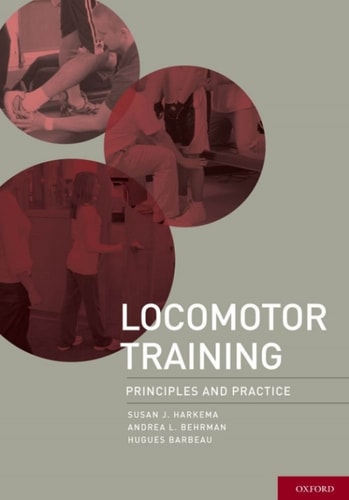
Locomotor Training
0
0
As an Amazon Associate and affiliate partner, Menrva Books earns from qualifying purchases. Learn more
Author Description
Physical rehabilitation for walking recovery after spinal cord injury is undergoing a paradigm shift. Therapy historically has focused on compensation for sensorimotor deficits after SCI using wheelchairs and bracing to achieve mobility. With locomotor training, the aim is to promote recovery via activation of the neuromuscular system below the level of the lesion. What basic scientists have shown us as the potential of the nervous system for plasticity, to learn, even after injury is being translated into a rehabilitation strategy by taking advantage of the intrinsic biology of the central nervous system. While spinal cord injury from basic and clinical perspectives was the gateway for developing locomotor training, its application has been extended to other populations with neurologic dysfunction resulting in loss of walking or walking disability.
Menrva's Summary
THE THESIS
The established paradigms of physical rehabilitation for walking recovery after spinal cord injury are being challenged by a new approach focused on promoting recovery through neuromuscular activation. Locomotor training leverages the nervous system's inherent plasticity, a concept demonstrated by basic science research, to create a rehabilitation strategy. While initially developed for spinal cord injuries, this method has expanded to aid other neurological conditions that impair walking ability. The core principle is to activate the neuromuscular system below the level of the lesion, aiming for recovery rather than compensation.
THE SCOPE MAP
- The paradigm shift in physical rehabilitation for walking recovery after spinal cord injury.
- Historical focus on compensation versus the new aim of promoting recovery.
- The role of neuromuscular activation below the level of the lesion.
- Translating basic science findings on nervous system plasticity into rehabilitation strategies.
- The intrinsic biology of the central nervous system as a basis for locomotor training.
- Extension of locomotor training applications to other populations with neurological dysfunction resulting in loss of walking or walking disability.
THE AUTHORITY PERSPECTIVE
This text represents a significant shift in the understanding and application of physical rehabilitation for individuals with spinal cord injuries. By focusing on the recovery of walking through neuromuscular activation, it moves beyond traditional compensatory strategies. The book details how insights from basic science regarding nervous system plasticity are being translated into effective clinical practice. Its scope extends beyond spinal cord injury to encompass other neurological conditions affecting gait.
Page Count:
185
Publication Date:
2010-12-14
Publisher:
Oxford University Press Academic US
ISBN-10:
0199711860
ISBN-13:
9780199711864
Non-Fiction
Science & Technology
Neurology
Medical
Physical Therapy
Rehabilitation
Community Tags
Similar Books