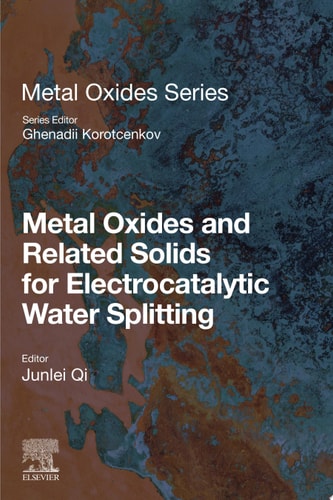
Metal Oxides and Related Solids for Electrocatalytic Water Splitting
0
0
As an Amazon Associate and affiliate partner, Menrva Books earns from qualifying purchases. Learn more
Author Description
Metal Oxides and Related Solids for Electrocatalytic Water Splitting reviews the fundamentals and strategies needed to design and fabricate metal oxide-based electrocatalysts. After an introduction to the key properties of transition metal oxides, materials engineering methods to optimize the performance of metal-oxide based electrocatalysts are discussed. Strategies reviewed include defect engineering, interface engineering and doping engineering. Other sections cover important categories of metal-oxide (and related solids) based catalysts, including layered hydroxides, metal chalcogenides, metal phosphides, metal nitrides, metal borides, and more. Each chapter introduces important properties and material design strategies, including composite and morphology design. There is also an emphasis on cost-effective materials design and fabrication for optimized performance for electrocatalytic water splitting applications. Lastly, the book touches on recently developed in-situ characterization methods applied to observe and control the material synthesis process. Introduces metal oxide-based materials for electrocatalytic water splitting applications, including their key properties, synthesis, design and fabrication strategies Reviews the most relevant materials design strategies, including defect engineering, interface engineering, and doping engineering Discusses the pros and cons of metal oxide-based materials for water splitting applications to aid in materials selection
Menrva's Summary
THE THESIS
This book investigates the design and fabrication of metal oxide-based electrocatalysts for efficient water splitting. It delves into the fundamental properties of transition metal oxides and explores advanced materials engineering techniques such as defect, interface, and doping engineering to optimize catalyst performance. The text also covers a range of related solid materials, including layered hydroxides, metal chalcogenides, phosphides, nitrides, and borides, detailing their specific properties and design strategies. A significant focus is placed on developing cost-effective materials and employing recent in-situ characterization methods to control synthesis processes for enhanced electrocatalytic water splitting applications.
THE SCOPE MAP
- Fundamentals and strategies for designing and fabricating metal oxide-based electrocatalysts.
- Key properties of transition metal oxides.
- Materials engineering methods: defect engineering, interface engineering, and doping engineering.
- Categories of catalysts: layered hydroxides, metal chalcogenides, metal phosphides, metal nitrides, metal borides, and others.
- Composite and morphology design strategies.
- Emphasis on cost-effective materials design and fabrication.
- Recently developed in-situ characterization methods for observing and controlling material synthesis.
THE AUTHORITY PERSPECTIVE
The book is structured to provide a comprehensive overview of metal oxide-based materials for electrocatalytic water splitting, covering their essential properties, synthesis, and design strategies. It reviews key materials design approaches, highlighting the advantages and disadvantages of various metal oxide-based materials to guide selection for water splitting applications. The content appears to be aimed at researchers and advanced students in materials science and electrochemistry.
Page Count:
404
Publication Date:
2022-05-05
Publisher:
Elsevier S & T
ISBN-10:
0323898068
ISBN-13:
9780323898065
Science
Non-Fiction
Catalysis
Nanotechnology
Electrochemistry
Community Tags
Similar Books