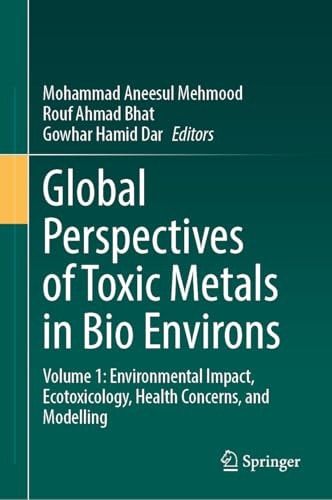
Global Perspectives of Toxic Metals in Bio Environs Volume 1: Environmental Impact, Ecotoxicology, Health Concerns, and Modelling
0
0
As an Amazon Associate and affiliate partner, Menrva Books earns from qualifying purchases. Learn more
Author Description
This book explores recent advances in heavy metal contamination research in a global context, and focusses on the role of recent technologies like recombinant bioremediation, phytoremediation, DNA technology and nanotechnology to provide sustainable managing strategies to mitigate adverse environmental and health impacts. Many heavy metals are used in industrial and commercial sectors, including iron, zinc, tin, lead, copper, tungsten, cadmium, arsenic, chromium, thallium, and lead, which, when disposed in the natural environment, lead to serious threats to ecological balance in biotic systems and threaten vulnerable human populations. Currently, global scientific communities are very worried about the detrimental health effects of these heavy metals and their adverse effects on almost all biological systems. Scientific research has recorded some alarming adverse impacts of heavy metals on biota like carcinogenesis, mutagenesis, teratogenesis, allergic interactions, endocrine-disruption, bone marrow damage, osteoporosis. and immune system damage. This book is therefore timely, and will be of interest to researchers, students professors, and policymakers examining toxic heavy metals in the environment and their adverse health impacts.
Menrva's Summary
THE THESIS
This book investigates the pervasive issue of toxic metal contamination in various environments and its multifaceted consequences. It delves into the latest advancements in understanding the environmental impact, ecotoxicological effects, and human health concerns associated with heavy metals, drawing on a global perspective. The authors explore how industrial and commercial activities release numerous toxic metals into natural ecosystems, posing significant threats to ecological balance and human well-being. The work highlights alarming adverse impacts such as carcinogenesis, mutagenesis, teratogenesis, and immune system damage, underscoring the urgency of developing effective management strategies.
THE SCOPE MAP
- Recent advances in heavy metal contamination research
- Role of recombinant bioremediation, phytoremediation, DNA technology, and nanotechnology
- Sustainable management strategies for mitigation
- Environmental impact of heavy metals
- Ecotoxicology of toxic metals
- Human health concerns including carcinogenesis, mutagenesis, and endocrine disruption
- Modelling of toxic metal dispersion and impact
- Global case studies and research findings
THE AUTHORITY PERSPECTIVE
The book addresses a critical and timely topic concerning the global scientific community's worries about the detrimental health effects of heavy metals. Its focus on recent technologies for remediation and management suggests it will be of significant interest to researchers, students, professors, and policymakers. The comprehensive scope, covering environmental impact, ecotoxicology, health concerns, and modelling, indicates a thorough examination of the subject matter. The inclusion of advanced techniques like nanotechnology and DNA technology points to a forward-looking approach to addressing these environmental challenges.
Page Count:
416
Publication Date:
2025-07-12
Publisher:
Springer Nature Switzerland
ISBN-10:
3031897242
ISBN-13:
9783031897245
Science & Technology
Science
Health
Non-Fiction
Ecotoxicology
Research
Community Tags
Similar Books