Iressa: A Boon to Colon Cancer
0
0
As an Amazon Associate and affiliate partner, Menrva Books earns from qualifying purchases. Learn more
Author Description
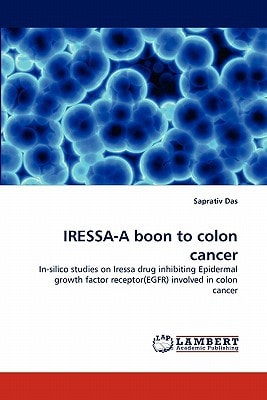
The epidermal growth factor receptor (EGFR) is under investigation as a therapeutic target for cancers. Colon cancer cell lines are variably dependent on autocrine stimulation of EGFR. This book therefore,examines the effects of a selective EGFR tyrosine kinase inhibitor, Gefitinib ( Iressa, ZD1839), on proliferation and survival of colon cancer cell lines whose autonomous proliferation is either EGFR ligand dependent or EGFR ligand independent. Using computational approach, different structural analogues were developed for Iressa, how it inhibits the epidermal growth factor kinase; the studies include nature of the colon cancer and how Iressa work to stop cancer and also explains the ligand binding in EGFR kinase. The consequences help to understand the nature of epidermal growth factor receptor kinase and how to inhibit intra and extra cellular signal. The In-silico properties facilitate more efficient design of screening libraries and serves as a foundation for numerous ADME compound profiling and drug ability assessments along the drug discovery value chain. It also helps to stop the cancer development; a new guideline for the design of inhibitors.
Menrva's Summary
THE THESIS
This book investigates the potential of Gefitinib (Iressa) as a therapeutic agent against colon cancer by examining its effects on colon cancer cell lines. The research explores how Iressa inhibits the epidermal growth factor receptor (EGFR) tyrosine kinase, a key target in cancer therapy, and analyzes the development of structural analogues for improved drug design. It details the mechanism of ligand binding within the EGFR kinase and the subsequent inhibition of intra- and extracellular signaling pathways. The study also highlights the utility of in-silico properties in drug discovery, offering a new guideline for designing effective inhibitors.
THE SCOPE MAP
- Analysis of Gefitinib's (Iressa) effect on colon cancer cell proliferation and survival.
- Examination of EGFR ligand-dependent and independent cell lines.
- Development of structural analogues for Iressa using computational approaches.
- Detailed explanation of Iressa's inhibition mechanism on EGFR tyrosine kinase.
- Exploration of ligand binding within the EGFR kinase.
- Understanding of intra
- and extracellular signal inhibition.
- Application of in-silico properties for drug screening and profiling.
- Guideline for designing novel EGFR kinase inhibitors.
THE AUTHORITY PERSPECTIVE
The research presented in this book focuses on the specific application of Gefitinib (Iressa) in colon cancer therapy, utilizing computational and in-vitro methods. The study's detailed examination of EGFR signaling pathways and drug design principles suggests a technical and specialized audience. The work aims to provide a foundation for further drug discovery efforts in oncology, particularly concerning targeted therapies.
Page Count:
76
Publication Date:
2011-02-01
Publisher:
Lap Lambert Academic Publishing GmbH KG
ISBN-10:
3844311173
ISBN-13:
9783844311174
Non-Fiction
Science
Drug Discovery
Cancer Research
Oncology
Computational Chemistry
Pharmacology
Community Tags
Similar Books