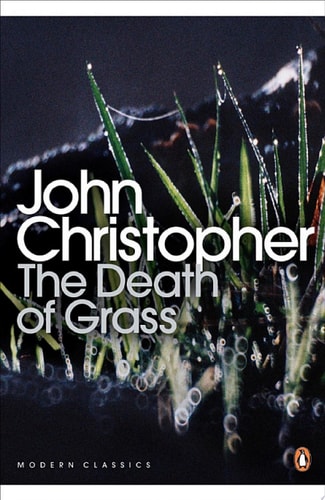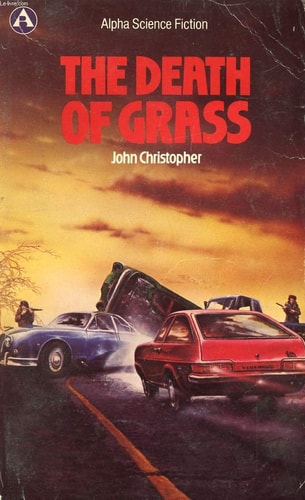
The Death of Grass
0
0
As an Amazon Associate and affiliate partner, Menrva Books earns from qualifying purchases. Learn more
Author Description
A thought experiment in future-shock survivalism' Robert MacFarlane 'Gripping... of all science fiction's apocalypses, this is one of the most haunting' Financial Times WITH AN INTRODUCTION BY ROBERT MACFARLANE A post-apocalyptic vision of the world pushed to the brink by famine, John Christopher's science fiction masterpiece The Death of Grass includes an introduction by Robert MacFarlane in Penguin Modern Classics. At first the virus wiping out grass and crops is of little concern to John Custance. It has decimated Asia, causing mass starvation and riots, but Europe is safe and a counter-virus is expected any day. Except, it turns out, the governments have been lying to their people. When the deadly disease hits Britain, society starts to descend into barbarism. As John and his family try to make it across country to the safety of his brother's farm in a hidden valley, their humanity is tested to its very limits. A chilling psychological thriller and one of the greatest post-apocalyptic novels ever written, The Death of Grass shows people struggling to hold on to their identities as the familiar world disintegrates - and the terrible price they must pay for surviving.
Menrva's Summary
THE PULSE
A mysterious virus that destroys all grass and grain crops triggers a rapid collapse of social order, forcing a family to flee across a disintegrating Britain. John Custance, an ordinary man, must navigate the breakdown of civilization as he attempts to reach his brother's fortified farm in a remote valley. He faces not only the physical threat of starvation but the moral erosion of his companions and the violent desperation of those they encounter. The narrative follows their arduous trek, documenting the shift from civilized behavior to primal survivalism as the familiar world vanishes.
INSIDE THE PAGES
- Exploration of the rapid decay of social institutions during a global crisis
- Focus on the moral compromises required for individual and family survival
- Depiction of the transition from urban safety to rural lawlessness
- Use of a linear, character-driven narrative structure
- Examination of the psychological impact of total societal collapse
- Realistic portrayal of human behavior under extreme resource scarcity
- Emphasis on the fragility of modern infrastructure and supply chains
- Contrast between the protagonist's initial denial and his eventual pragmatic ruthlessness
THE COLLECTIVE ECHO
Discussion often centers on the stark, unflinching realism with which the author depicts the rapid dissolution of societal norms. Readers frequently highlight the unsettling nature of the protagonist's moral decline, noting that the book avoids easy answers regarding human nature. Critics often compare the work to other mid-century disaster fiction, noting its focus on psychological tension over technological spectacle. The pacing is frequently described as relentless, mirroring the characters' desperate need to reach safety before the chaos consumes them entirely.
Page Count:
96
Publication Date:
1979-01-01
Publisher:
Oxford Univ Pr
ISBN-10:
0194242323
ISBN-13:
9780194242325
Dystopian
Science Fiction
Thriller
Post-Apocalyptic
Survival
Contemporary
Science Fiction