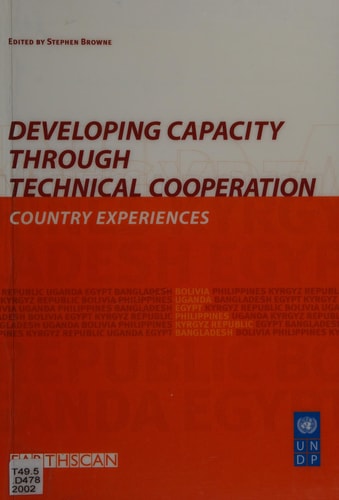
Developing Capacity Through Technical Cooperation: Country Experiences
0
0
As an Amazon Associate and affiliate partner, Menrva Books earns from qualifying purchases. Learn more
Author Description
Technical co-operation involving northern experts transferring expertise to the south has not always worked. In fact it has sometimes been counter-productive, fostering a dependency on outside help rather than creating a genuine indigenous capability. This study by experts from Harvard University and the UN Development Programme (UNDP) uses a range of country studies to analyze what has worked in the past, what hasn't, and how to ensure that future co-operation results in genuine capacity building and ownership of the new capabilities by the recipients. It aims to offer a framework for evaluating different methods to achieve these goals. The volume is a companion to the earlier Capacity for Development, and should be useful for all those working in international development, as well as researchers, academics and students.
Menrva's Summary
THE THESIS
This study investigates the effectiveness of technical cooperation in building sustainable capacity in developing nations. The book analyzes past country experiences, highlighting instances where traditional North-South expert transfers fostered dependency rather than indigenous capability. It aims to identify successful strategies and offer a framework for evaluating methods that ensure future cooperation leads to genuine capacity building and recipient ownership of new capabilities.
THE SCOPE MAP
- Analysis of country-specific case studies on technical cooperation.
- Examination of factors contributing to successful vs. unsuccessful capacity building.
- Framework for evaluating different methods of technical cooperation.
- Focus on fostering indigenous capability and recipient ownership.
- Companion volume to 'Capacity for Development'.
- Insights for international development practitioners, researchers, academics, and students.
THE AUTHORITY PERSPECTIVE
This volume is presented as a practical guide for those involved in international development, drawing on expert analysis from Harvard University and the UNDP. The book's approach, utilizing country studies to dissect the successes and failures of technical cooperation, suggests a focus on evidence-based strategies. Its aim to provide a framework for future cooperation indicates an intention to influence policy and practice in the field.
Page Count:
222
Publication Date:
2002-12-01
Publisher:
Routledge
ISBN-10:
1853839698
ISBN-13:
9781853839696
Economics
Non-Fiction
International relations
Case studies
Community Tags
Similar Books