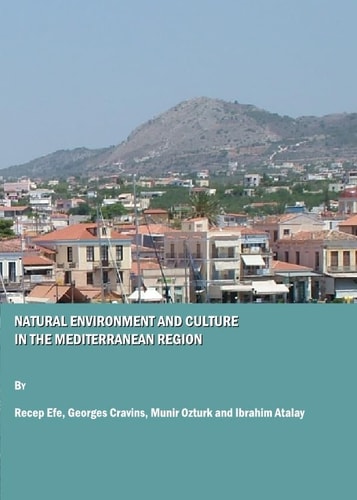
Natural Environment and Culture in the Mediterranean Region
0
0
As an Amazon Associate and affiliate partner, Menrva Books earns from qualifying purchases. Learn more
Author Description
The largest of the world's five Mediterranean-climate regions and one of the largest archipelagos in the world, the Mediterranean Basin is located at the intersection of two major landmasses, Eurasia and Africa, which contributes to its cultural and high biodiversity. Although much of the hotspot was once covered by a dense cover of forests, the Basin has experienced intensive human development and impact on its ecosystems for at least 8000 years, significantly longer than any other hotspot. The greatest impacts have been deforestation, habitat fragmentation, intensive grazing and fires, and infrastructure development, especially on the coast, which have distinctly altered the landscape. The agricultural lands, evergreen woodlands and maquis habitats dominating the basin are the result of these disturbances over several millennia. Many of the endemic species are narrow endemics, being confined to very small areas, and thus are extremely vulnerable to the anthropogenic pressures. Probably more species have gone extinct here than in any other hotspot. At present approximately 300 million people live here and water shortages and desertification will be the serious problems in the near future. Tourism is placing a significant pressure on the coastal ecosystems. The construction of infrastructure and the direct impacts of people using and trampling sensitive dune ecosystems remains a key threat to coastal areas. In view of the valuable natural heritage there is a great need for weighing our ecological impact in order to achieve a balance between biodiversity conservation and human development and above all, how to maintain traditional rural livelihoods in a way that benefits biodiversity. The changes in the atmosphere, geomorphological processes, and most natural cycles involving a biomass of any substantial size denote the arrival of a new geological period the Anthropocene. We the humans are actively changing the overall conditions of our existence by terraformin
Menrva's Summary
THE THESIS
The Mediterranean Basin faces a critical juncture where its rich biodiversity and unique cultural heritage are threatened by intensive human development and environmental pressures. The book examines the historical impacts of human activity, such as deforestation, habitat fragmentation, and infrastructure development, on the region's ecosystems, which have been shaped over 8000 years. It highlights the vulnerability of endemic species to ongoing anthropogenic pressures and forecasts future challenges like water shortages and desertification, exacerbated by tourism. The central argument revolves around the urgent need to balance biodiversity conservation with human development, particularly in maintaining traditional rural livelihoods in ways that benefit, rather than harm, the environment.
THE SCOPE MAP
- Analysis of the Mediterranean Basin as one of the world's five Mediterranean-climate regions and a major archipelago.
- Discussion of the region's high biodiversity and its location at the intersection of Eurasia and Africa.
- Detailed examination of historical human impacts, including deforestation, habitat fragmentation, grazing, fires, and infrastructure development over at least 8000 years.
- Identification of agricultural lands, evergreen woodlands, and maquis habitats as products of long-term disturbances.
- Focus on the vulnerability of narrow endemic species to anthropogenic pressures and the high rate of species extinction in the region.
- Exploration of future challenges such as water shortages and desertification affecting approximately 300 million inhabitants.
- Assessment of the impact of tourism on coastal ecosystems, including dune degradation.
- Consideration of the Anthropocene and humanity's role in altering global environmental conditions.
THE AUTHORITY PERSPECTIVE
The book is likely to be regarded as a comprehensive scientific study detailing the complex interplay between the natural environment and human culture in the Mediterranean region. Its focus on historical ecological impacts and future challenges suggests a text aimed at specialists in environmental science, conservation, and regional geography. The detailed analysis of anthropogenic pressures and biodiversity loss positions it as a significant contribution to understanding the unique ecological and cultural dynamics of this globally important hotspot.
Page Count:
496
Publication Date:
2008-01-01
Publisher:
Cambridge Scholars Publishing
ISBN-10:
1847186580
ISBN-13:
9781847186584
Science
Non-Fiction
Conservation
Ecology
Anthropocene
Biodiversity
Community Tags
Similar Books