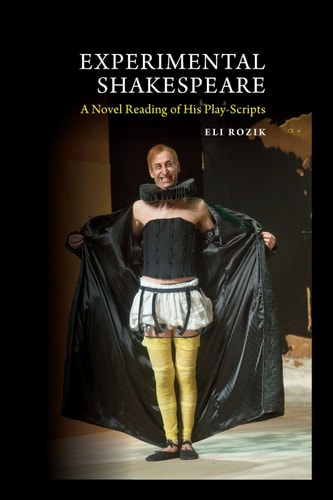
Experimental Shakespeare: A Novel Reading of His Play-Scripts
0
0
As an Amazon Associate and affiliate partner, Menrva Books earns from qualifying purchases. Learn more
Author Description
Shakespeare's playwrighting and possibly his directing reflect a consistent intent to explore principles that, in his days, were perceived as foreign to the dramatic idiom. This is evident within the framework of contemporary theatre theories at the time. Eli Rozik's novel reading of the play-scripts provides the classical and synchronic theoretical background required to capture Shakespeare's innovative approach, and is a major contribution to the history of European theatre practice and theory. All of Rozik's earlier publications on theatre practice and theory engage with Shakespeare's play-scripts by example and these insights are re-integrated herein. The result is a new and challenging concept of Shakespeare's contribution to the art of theatre, and to a viewpoint of the Bard as an unprecedented experimental playwright and innovator in all that concerns the mastery of theatre art and, especially, the expansion of its means of expression. The central concern of this study is not the experimentation by modernist and postmodernist directors in producing Shakespeare's play-scripts for diachronic audiences, but with the exploration, experimentation and innovation embodied in the Bard's practice itself, as reflected in the wide artistic and historical range of the play-scripts. Drama and theatre scholarship, with its concomitant comprehensive method of analysis, is indispensable in revealing the nature of the Bard's playwrighting, his historical explorations and theatrical innovations. Rozik's earlier works on the nature of theatre, fictional creativity and origin, best place him to interpret Shakespeare's works against their synchronic theoretical background in the light that experimentation lay at the heart of Shakespeare's creativity.
Menrva's Summary
THE THESIS
This book investigates whether William Shakespeare's play-scripts reveal a consistent intent to explore principles perceived as foreign to the dramatic idiom of his time, positioning him as an experimental playwright and innovator.
THE SCOPE MAP
- An analysis of Shakespeare's play-scripts through the lens of contemporary theatre theories.
- Exploration of the classical and synchronic theoretical background informing Shakespeare's innovative approach.
- Re-integration of insights from the author's earlier publications on theatre practice and theory concerning Shakespeare.
- A new concept of Shakespeare's contribution to theatre art, emphasizing his role as an experimental playwright.
- Focus on the experimentation, exploration, and innovation embodied in Shakespeare's practice itself, rather than modernist/postmodernist directorial interpretations.
- The indispensable role of drama and theatre scholarship in revealing Shakespeare's playwrighting, historical explorations, and theatrical innovations.
THE AUTHORITY PERSPECTIVE
Eli Rozik's work offers a novel reading of Shakespeare's play-scripts, arguing for his consistent intent to explore principles outside the contemporary dramatic idiom. The book provides the necessary theoretical background to understand Shakespeare's innovative approach, contributing significantly to the history of European theatre practice and theory. It challenges conventional views by presenting the Bard as an unprecedented experimental playwright and innovator in theatrical mastery and expression. The study's central concern is Shakespeare's practice itself, as reflected in his play-scripts, rather than later directorial interpretations.
Page Count:
298
Publication Date:
2016-01-01
Publisher:
Sussex Academic Press
ISBN-10:
1845198271
ISBN-13:
9781845198275
Non-Fiction
Literary Criticism
Theater History
Community Tags
Similar Books