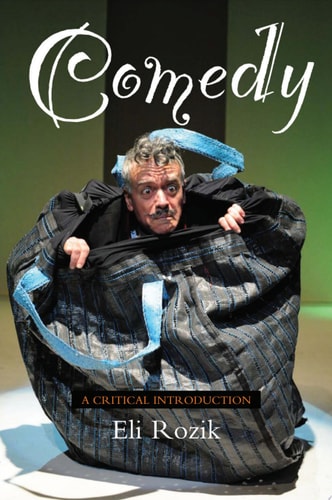
Comedy: A Critical Introduction
0
0
As an Amazon Associate and affiliate partner, Menrva Books earns from qualifying purchases. Learn more
Author Description
Herewith an original approach to the study of comedy. While assimilating theoretical insights from Aristotle to the present day, it contests, inter alia, the theory of comedy's ritual origin; challenges the age-old and continuing attempts to determine the structure of action that characterises comedy; and suggests instead that structures of action are shared by all genres, and that it is the specific mood that accounts for their differences. Mood is a prism through which a playwright wishes the spectator to perceive a fictional world. Comedy is characterised by its light-hearted mood, which generates a specific kind of laughter. If mood determines the genre of a fictional world, in contrast to current theory, comedy, satiric drama and grotesque drama are different genres promoting different moods and aiming at different effects. Each genre should thus be read and experienced according to its inherent rules and not in terms of a theory that lumps these genres together. The book discusses the pivotal role of commedia dell'arte in both reflecting comedy's classical tradition and influencing subsequent developments, especially in comedy's style of acting; it explores the relations between comedy and carnival and between comedy and joke-telling; probes the view that comedy is characterised by a unique vision; and examines comedy in different media -- such as cinema, comics, puppet theatre, radio drama and TV drama. Eli Rozik questions the traditional semiotic view that all meaning is in the text, and suggests that, in generating comedic meaning, the spectator's contribution/reaction is no less vital than that of the text itself. Major contributions to a general theory of comedy, and to a sound methodology for the analysis of comedies, are presented, and ample reference to comedies and/or pertinent analyses of such comedies, written over the course of 2,500 years of theatre recorded history, is provided to enable readers to grasp ideas in their original terminology and lo
Menrva's Summary
THE THESIS
This book presents an original approach to the study of comedy, challenging established theories on its ritual origins and structural characteristics. Eli Rozik, drawing on theoretical insights from Aristotle to the present day, argues that mood, rather than structure, defines comedic genres. The work posits that comedy's light-hearted mood generates a specific kind of laughter, distinguishing it from satiric and grotesque drama. Rozik also questions traditional semiotic views, emphasizing the spectator's crucial role in generating comedic meaning.
THE SCOPE MAP
- Analysis of comedy's theoretical lineage from Aristotle to contemporary thought.
- Critique of theories regarding comedy's ritual origins and structural action.
- Exploration of mood as the defining characteristic of comedic genres.
- Discussion of commedia dell'arte's influence on comedic tradition and acting.
- Examination of the relationships between comedy, carnival, and joke-telling.
- Investigation into whether comedy possesses a unique vision.
- Analysis of comedy across various media, including cinema, comics, and theatre.
THE AUTHORITY PERSPECTIVE
This work offers a significant contribution to the general theory of comedy and its analysis, proposing a novel framework centered on mood. It challenges long-held assumptions within the field, particularly regarding the structural elements and origins of comedic performance. The book's comprehensive scope, spanning historical traditions like commedia dell'arte and extending to modern media, provides a robust methodology for understanding comedic meaning.
Page Count:
242
Publication Date:
2011-08-24
Publisher:
Liverpool University Press
ISBN-10:
1782847278
ISBN-13:
9781782847274
Non-Fiction
Theater Studies
Literary Criticism
Performance Studies
Community Tags
Similar Books