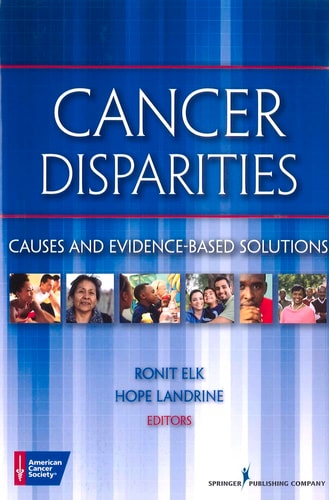
Cancer Disparities: Causes and Evidence-Based Solutions
0
0
As an Amazon Associate and affiliate partner, Menrva Books earns from qualifying purchases. Learn more
Author Description
The volume sheds new light on reducing disparities by complementing currently available monographs, through the provision of solutions that are not only theoretically innovative but also empirically effective. Indeed, Cancer Disparities: Causes and Evidence-Based Solutions admirably achieves two key objectives that are crucial for advances in the field: (a) providing an up-to-date overview of cancer-related disparities and (b) describing evidence-based interventional approaches to close the cancer-related disparities gap. The implicit promise is that these approaches will enable public health practitioners, cancer control workers, and community members to use or adapt them in their own communities. This volume is essential to help make that promise a reality."--PsycCRITIQUES Cancer is not randomly distributed in the United States. Its incidence varies by race, ethnicity, socioeconomic status, and other geographic and demographic factors. This volume, co-published with the American Cancer Society, is the first to examine the biological, racial, and socioeconomic factors that influence cancer incidence and survival. In addition, it presents 15 previously unpublished, evidence-based interventions to reduce and eliminate cancer disparities. The book explains the nature, scope, and causes of cancer disparities across different populations and then presents unique programs proven to reduce such inequalities in the areas of cancer prevention, screening and early detection, treatment, and survivorship. They represent a variety of cancers, populations, and communities across the U.S. Descriptions of each intervention include tests of effectiveness and are written in sufficient detail for readers to replicate them within their own communities. Key Features: Offers an in-depth look at the latest research behind cancer disparities Written by highly respected and published cancer researchers Includes 15 never-before p
Menrva's Summary
THE THESIS
Cancer incidence and survival are not randomly distributed, but vary significantly by demographic and geographic factors. This volume examines the complex interplay of biological, racial, and socioeconomic influences on cancer disparities in the United States. It presents an up-to-date overview of these disparities and details 15 empirically effective, evidence-based interventions designed to close the gap in cancer-related outcomes. The book aims to equip public health practitioners, cancer control workers, and community members with actionable strategies for reducing inequalities in cancer prevention, screening, treatment, and survivorship.
THE SCOPE MAP
- An in-depth examination of the latest research on cancer disparities.
- Analysis of biological, racial, and socioeconomic factors influencing cancer incidence and survival.
- Presentation of 15 previously unpublished, evidence-based interventions to reduce cancer disparities.
- Detailed descriptions of programs proven to reduce inequalities in cancer prevention, screening, early detection, treatment, and survivorship.
- Case studies representing a variety of cancers, populations, and communities across the U.S.
- Information on the effectiveness of each intervention, with sufficient detail for replication.
THE AUTHORITY PERSPECTIVE
This volume is regarded as essential for advancing the field of cancer disparity reduction, offering both theoretical innovation and empirically validated solutions. It is praised for admirably achieving two crucial objectives: providing a current overview of cancer-related disparities and describing evidence-based interventions to address them. The book's strength lies in its detailed presentation of unique programs proven to reduce inequalities, written with sufficient detail for readers to adapt them within their own communities. It is authored by highly respected cancer researchers, making it a valuable resource for practitioners and community members alike.
Page Count:
542
Publication Date:
2012-01-01
Publisher:
Springer Publishing Company
ISBN-10:
0826108822
ISBN-13:
9780826108821
Non-Fiction
Science & Technology
Health
Science
Medical research
Public Health
Community Tags
Similar Books