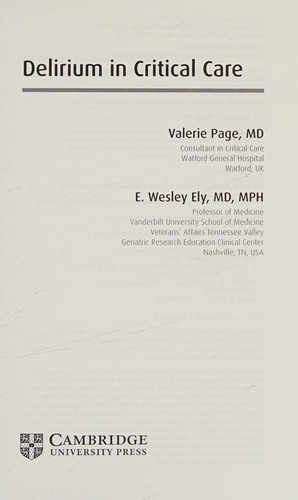
Delirium in Critical Care
0
0
As an Amazon Associate and affiliate partner, Menrva Books earns from qualifying purchases. Learn more
Author Description
Product Description Delirium is a common clinical problem in critical care patients, with up to 80% of patients experiencing at least one episode during their time on a critical care unit. It is associated with significantly adverse outcomes for patients, including death and long-term cognitive impairment equivalent to at least a mild dementia. This clinical handbook explains why delirium goes unrecognised in most ICUs and describes simple tools the bedside clinician can use to detect it, even in the ventilated patient. It is in an easy-to-read format and illustrated with figures, case reports and patient testimony. This book contains all you need to know in order to prevent, diagnose and manage delirium in your patients. Delirium in Critical Care is essential reading for all members of the intensive care multidisciplinary team, including senior and junior physicians, and nurses. Review '[This book]... is aimed at the '... trainee intensivist or anaesthetist...' but would be an invaluable read for any member of the multidisciplinary team... It was my bedtime reading for two nights and I couldn't put it down! I highly recommend it to anyone involved in caring for patients in critical care.' British Journal of Anaesthesia'... an easy-to-read summary of a vital clinical problem.' Doody's Notes Book Description Delirium in intensive care is associated with serious adverse outcomes including dementia and death and it is usually silent. This clinical handbook is for any clinician working in ICU who wants to know how to diagnose and manage delirium. About the Author Valerie Page is Consultant in Critical Care, Watford General Hospital, West Hertfordshire Hospitals NHS Trust, UK.
Menrva's Summary
THE THESIS
Delirium is a pervasive and often unrecognized condition in critical care settings, leading to severe patient outcomes. This clinical handbook addresses the high prevalence of delirium in ICUs, where up to 80% of patients may experience it, resulting in increased mortality and long-term cognitive impairment akin to dementia. The book equips bedside clinicians with simple tools for detection, even in ventilated patients, and outlines strategies for prevention, diagnosis, and management. It is designed for all members of the intensive care multidisciplinary team, offering practical guidance in an accessible format.
THE SCOPE MAP
- Explanation of why delirium is frequently unrecognised in Intensive Care Units (ICUs).
- Introduction of simple, practical tools for bedside clinicians to detect delirium.
- Specific methods for diagnosing delirium, even in ventilated patients.
- Strategies for the prevention of delirium in critical care patients.
- Comprehensive management protocols for diagnosed delirium.
- Inclusion of case reports and patient testimony to illustrate concepts.
- Guidance tailored for senior and junior physicians, and nurses within the ICU team.
THE AUTHORITY PERSPECTIVE
This clinical handbook is regarded as essential reading for all members of the intensive care multidisciplinary team, including physicians and nurses. Reviews highlight its accessibility, noting it as an easy-to-read summary of a vital clinical problem. One reviewer found it so engaging that they couldn't put it down, recommending it highly to anyone involved in critical care patient management. The book is particularly aimed at trainee intensivists and anaesthetists but offers value across the entire team.
Page Count:
0
Publication Date:
2011-12-05
Publisher:
Cambridge University Press
ISBN-10:
0511997388
ISBN-13:
9780511997389
Health
Non-Fiction
Science & Technology
Critical Care
Diagnosis
Medicine
Clinical Handbook
Community Tags
Similar Books