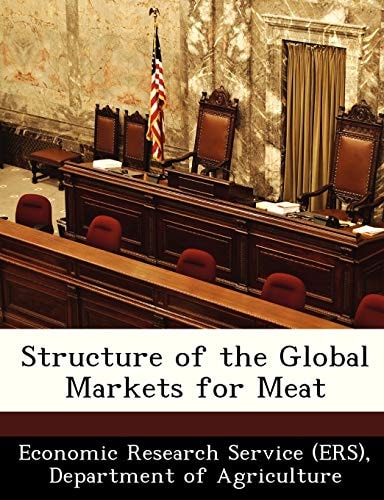
Structure of the Global Markets for Meat
0
0
As an Amazon Associate and affiliate partner, Menrva Books earns from qualifying purchases. Learn more
Author Description
Meat trade flows among countries and world regions are determined largely by differences among countries in their resource base, their preferences for meat types and cuts, the extent and character of barriers to trade, and the industry structure. Future growth of meat trade depends on further liberalization of protectionist barriers, eradication of animal diseases, economic development, and population growth. Trade growth is likely to feature greater complexity in trade patterns, with more countries engaging in trade, and with an increased tendency for individual countries to import and export meat cuts and offal from the same animal species.
Menrva's Summary
THE THESIS
This report analyzes the complex factors shaping global meat trade and forecasts future trends. The Economic Research Service (ERS) details how resource availability, consumer preferences, trade barriers, and industry structures dictate international meat flows. Future expansion of this trade hinges on reduced protectionism, disease control, economic development, and population increases, suggesting a more intricate global market with increased participation and intra-country trade of various meat products.
THE SCOPE MAP
- Analysis of meat trade flows among countries and world regions.
- Factors influencing trade: resource base, preferences, trade barriers, industry structure.
- Projections for future growth of meat trade.
- Impact of trade liberalization on meat markets.
- Role of animal disease eradication in trade expansion.
- Influence of economic development and population growth on meat consumption and trade.
- Anticipated complexity in future trade patterns.
- Increased tendency for countries to import and export different meat cuts and offal from the same species.
THE AUTHORITY PERSPECTIVE
This report from the ERS provides a detailed economic analysis of the global meat market. It systematically breaks down the determinants of trade, offering insights into both current dynamics and future trajectories. The work is likely to be valued by economists, policymakers, and industry professionals seeking a comprehensive understanding of international meat commerce. Its focus on liberalization, disease control, and demographic shifts positions it as a key resource for strategic planning in the agricultural sector.
Page Count:
40
Publication Date:
2012-09-13
Publisher:
BiblioGov
ISBN-10:
1249370795
ISBN-13:
9781249370796
Non-Fiction
Economics
Agriculture
Trade
Community Tags
Similar Books