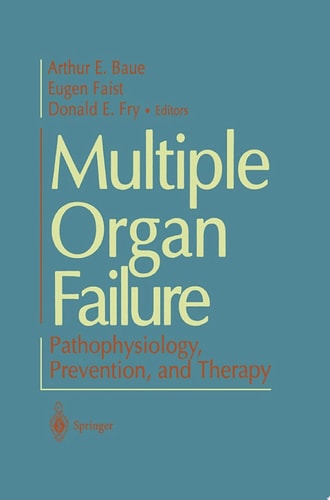
Multiple Organ Failure
0
0
As an Amazon Associate and affiliate partner, Menrva Books earns from qualifying purchases. Learn more
Author Description
Inflammation in itself is not to be considered as a disease... and in disease, where it can alter the diseased mode of action, it likewise leads to a cure; but where it cannot accomplish that solitary purpose... it does mischief - John Hunter, A Treatise on the Blood, ITfIlammation, and Gunshot Woundr (London, 1794)1 As we reached the millennium, we recognized the gap between our scientific knowledge of biologic processes and our more limited clinical capabilities in the care of patients. Our science is strong. Molecular biology is powerful, but our therapy to help patients is weaker and more limited. For this reason, this book focuses on the problems of multiple organ failure (MOF), multiple organ dysfunction syndrome (MODS), and systemic inflammatory response syndrome is, patients who have severe injuries; require major, (SIRS) in high-risk patients, that overwhelming operations; or have serious illnesses requiring intensive care; patients who have diseases elsewhere, in other organs or systems, that limit their capabilities to survive a new insult; and patients who are elderly or at high risk for sepsis or other complications. These are the patients who need our help. They need the advances in science, in molecular biology, immunology, pathophysiology, biochemistry, genetics, high technology, and other areas of maximum support at the bedside. These advances could potentially have the greatest impact on improving patient care.
Menrva's Summary
THE THESIS
The central problem addressed is the significant gap between advanced scientific understanding of biological processes and limited clinical capabilities in treating patients experiencing severe systemic illness. The book focuses on multiple organ failure (MOF), multiple organ dysfunction syndrome (MODS), and systemic inflammatory response syndrome (SIRS) in high-risk patients, including those with severe injuries, major operations, serious illnesses requiring intensive care, or pre-existing conditions that compromise their ability to survive new insults. It highlights the need for applying recent scientific advances in molecular biology, immunology, pathophysiology, biochemistry, genetics, and high technology to improve patient care at the bedside.
THE SCOPE MAP
- Detailed exploration of the pathophysiology of Multiple Organ Failure (MOF) and Multiple Organ Dysfunction Syndrome (MODS).
- Analysis of the Systemic Inflammatory Response Syndrome (SIRS) in high-risk patient populations.
- Discussion of the scientific knowledge gap between molecular biology and clinical therapy.
- Focus on patient populations including those with severe injuries, major operations, critical illnesses, and elderly or high-risk individuals.
- Integration of advances in molecular biology, immunology, pathophysiology, biochemistry, and genetics.
- Emphasis on bedside application of high technology and maximum support strategies.
THE AUTHORITY PERSPECTIVE
This book addresses the critical challenges in critical care medicine, specifically focusing on the complex conditions of multiple organ failure and systemic inflammatory response syndrome. It aims to bridge the divide between cutting-edge scientific knowledge and practical clinical application for severely ill patients. The text emphasizes the need for integrating advancements in various biological and technological fields to enhance patient outcomes. The authors highlight the importance of applying this knowledge at the bedside for maximum impact.
Page Count:
712
Publication Date:
2012-12-06
Publisher:
Springer Nature
ISBN-10:
1461212227
ISBN-13:
9781461212225
Non-Fiction
Science
Critical Care
Medical
Inflammation
Community Tags
Similar Books